






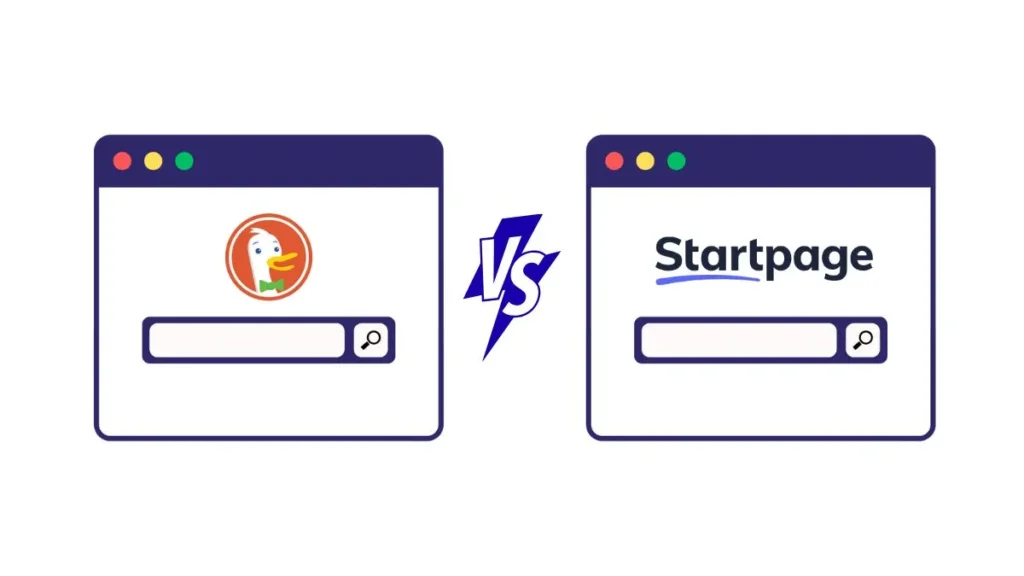
When considering Startpage vs DuckDuckGo, it’s a key comparison for users turning away from mainstream search engines like Google and Bing in an era of growing concerns over digital privacy. As people increasingly seek more secure alternatives, two of the most prominent players in the private search space are Startpage vs DuckDuckGo.
Both promise to protect your search history and personal data, but they go about it in different ways. This comprehensive comparison will break down the key differences between them to help you decide which is the best fit for your online privacy needs.
What Is Startpage?
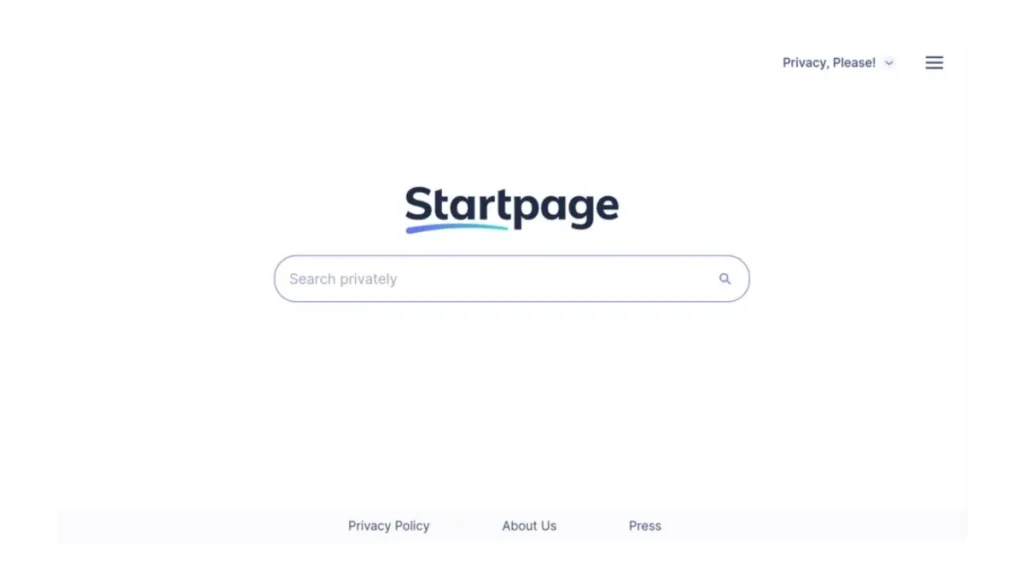
Startpage is a Dutch search engine that positions itself as “the world’s most private search engine.” Launched in 2006, it was created to give users an alternative to mainstream search engines where privacy is prioritized. Its core value proposition is that it allows you to search with Google’s powerful results without being tracked.
It acts as a private proxy, removing all personally identifiable information from your query before sending it to Google. This means you get the benefit of Google’s robust search index without compromising your privacy.
Pros & Cons of Startpage
While Startpage offers the significant advantage of accessing Google’s powerful search results privately, it’s important to weigh this against potential trade-offs. Understanding its strengths, like EU-based privacy protection, and its weaknesses helps determine if it’s the right choice for you.

Pros:
- Google Search Results: Leverages Google’s industry-leading search index for high-quality, relevant results.
- No IP Address Logging: Does not record your IP address or your search queries.
- Anonymous View: A standout feature that allows you to visit websites from the search results through a proxy, protecting you from website trackers.
- EU-Based: Headquartered in the Netherlands, it is protected by stringent EU privacy laws, including the General Data Protection Regulation (GDPR).
- Unbiased Search Results Contextual Ads: Since Startpage doesn’t create a personal data profile on you, it provides “unprofiled” search results. This means search results are not influenced by your past activity, and ads are based only on the search keywords, not your personal data.
Cons:
- Slightly Slower Performance: The process of anonymizing your search can sometimes result in slightly slower load times compared to a direct search on Google.
- Lack of Personalization: While this is a pro for privacy, it can be a con for user convenience. Searches are not tailored to your location or history, for example results like “restaurants near me” may not appear automatically.
- Ownership: Startpage is majority-owned by System1, an advertising technology company, which has raised concerns for some privacy advocates, though Startpage maintains its privacy policies are independent and unchanged.
- No Advanced Features: Startpage lacks some advanced tools Google has such as in-depth knowledge panels and interactive search elements for specific types of queries.
What is DuckDuckGo?
DuckDuckGo is a U.S.-based anonymous search engine that has gained significant popularity for its strong commitment to user privacy. Founded by Gabriel Weinberg in 2008, it was created to provide a private alternative to mainstream search engines. Unlike Startpage which many users ask about when searching “what is startpage search engine” because it delivers Google results anonymously, DuckDuckGo has its own search crawler, DuckDuckBot.
It also gathers search results from over 400 sources, including Bing, Yahoo, and Yandex. As a privacy-focused search engine, DuckDuckGo blocks trackers, does not create user profiles, and is committed to offering an untracked and secure search experience.
Pros & Cons of DuckDuckGo
The DuckDuckGo private search engine has established itself as a leading privacy-centric alternative, building an entire ecosystem beyond just search. However, its independent approach to search results and its US jurisdiction presents a unique set of benefits and drawbacks to consider.
Pros:
- Simple and Clean Interface: The design is minimalist and clutter-free, providing a quick and easy search experience.
- Strong Privacy Policy: Does not track your searches, IP address, or create user profiles.
- !Bangs Feature: A powerful tool that allows you to quickly search thousands of other sites directly from the DuckDuckGo search bar.
- Comprehensive Privacy Tools: Offers a privacy-focused browser for mobile and desktop that includes tracker blocking and email protection.
- No “Filter Bubble”: Since it doesn’t track users, everyone sees the same objective results for a given query, helping you avoid personalized content bias.
- Transparent: Open about its data sources and how it generates revenue through non-personalized ads.
Cons:
- Lack of Personalization: Like Startpage, it cannot provide tailored results based on your location or browsing habits.
- Search Result Quality: While generally good, some users find the search results to be less comprehensive or relevant than Google’s, particularly for complex or niche queries.
- US-Based: Being headquartered in the United States means it falls under US jurisdiction, which has less stringent privacy laws compared to the EU.
- No Advanced Snippets: While it has “Instant Answers,” the direct answers and rich information boxes are not as comprehensive or frequent as those on major search engines like Google.
- Fewer Advanced Features: DuckDuckGo doesn’t offer the same extensive ecosystem of integrated services as Google (e.g., Google Maps, Google Drive, Gmail, etc.) or the advanced knowledge panels and AI overviews that Google has been developing.
Startpage vs DuckDuckGo: Feature-by-Feature Comparison
| Category | Startpage | DuckDuckGo |
| Privacy | – Does not log IP addresses or search history. – Offers Anonymous View for browsing sites without revealing your identity. – Based in the EU, protected by GDPR laws. | – Does not log IP addresses or search history. – Privacy suite extends beyond search with browser & email protection. – Based in the U.S., subject to U.S. jurisdiction. |
| Search Results | – Acts as a private gateway to Google’s search index. – Provides Google-quality results without tracking. | – Uses its own DuckDuckBot crawler plus 400+ sources (including Bing, Yahoo, Yandex). – Results improving but can be less precise, especially for long-tail queries. |
| Performance & Speed | Fast and responsive, but anonymizing queries can make it slightly slower than direct Google searches. | Consistently quick performance with no additional anonymization steps. |
| Unique Features | Anonymous View lets you visit sites via proxy, hiding your IP and personal data. | !Bangs allow direct searches on other websites (e.g., typing !w privacy goes directly to Wikipedia). |
| Mobile Experience | – Clean, minimal mobile app and site. – Anonymous View available on mobile as well. | Robust mobile browser with built-in tracker blocking and !Bangs support. |
1. Privacy
Startpage vs DuckDuckGo are built on a foundation of privacy. Neither search engine logs your IP address or your search history. However, there are subtle differences in their approach. Startpage’s “Anonymous View” offers an additional layer of protection by allowing you to browse websites without revealing your identity to the site itself. On the other hand, DuckDuckGo’s privacy suite extends beyond search with its browser and email protection services. For users still wondering is DuckDuckGo legitimate, its consistent commitment to no-tracking policies offers reassurance.
A key differentiator is their location. Startpage’s EU base provides the robust legal protection of GDPR, which many privacy-conscious users prefer over the US jurisdiction where DuckDuckGo operates.
2. Search Results
This is where the two services diverge the most. Startpage acts as a private gateway to Google’s search index. This means you get the same high-quality results you’re accustomed to from Google, without the tracking. DuckDuckGo uses a combination of its own crawler and hundreds of other sources, with a significant portion coming from the Bing network. While its results are continuously improving, they can sometimes feel less precise than Google’s, especially for long-tail keywords.
3. Performance & Speed
In general, both search engines are fast and responsive. However, due to the extra step of anonymizing your query and fetching results from Google, Startpage can occasionally be a fraction of a second slower than a direct search. DuckDuckGo’s performance is consistently quick. For the average user, the speed difference is likely negligible.
4. Unique Features
Each service has a distinct standout feature that sets it apart.
- DuckDuckGo is well-known for its “!Bangs.” This feature allows you to use shortcuts to search directly on other websites. For example, typing “!w privacy” will take you straight to the Wikipedia article on privacy.
- Startpage’s most unique feature is “Anonymous View.” You’ll find a mask icon next to each search result that, when clicked, opens the webpage through a proxy. This shields your IP address and other identifying information from the website you’re visiting.
5. Mobile Experience
On mobile, the experience diverges again. DuckDuckGo offers a dedicated mobile browser app (iOS and Android) with built-in tracker blocking, encryption enforcement, and the same private search integration. It’s designed as an all-in-one privacy tool.Startpage, on the other hand, is available as a mobile-friendly website and also offers a search app. While the experience is smooth, it focuses solely on private search, without the extra browsing and email protection features DuckDuckGo provides.
How to Boost Privacy Beyond Private Search Engines by Using TurisVPN
While private search engines are a crucial step in protecting your online privacy, they don’t offer complete anonymity. Your Internet Service Provider (ISP) can still see the websites you visit, including that you are using Startpage or DuckDuckGo. To achieve a higher level of privacy, pairing a private search engine with a Virtual Private Network (VPN) like TurisVPN is recommended.
Why a VPN is still necessary even with private search engines
A VPN encrypts your entire internet connection, not just your search queries. This means your ISP cannot see your online activity, and the websites you visit cannot identify your real IP address. It creates a secure tunnel for all your internet traffic, providing a comprehensive layer of privacy that a private search engine alone cannot.
Risks of using search engines without VPN
If you’re already taking steps to protect your privacy with Startpage DuckDuckGo, pairing them with a VPN like TurisVPN can give you an even stronger layer of security—plus the bonus of accessing geo-restricted content such as Filipino dramas. Here’s how to do it in just a few steps:
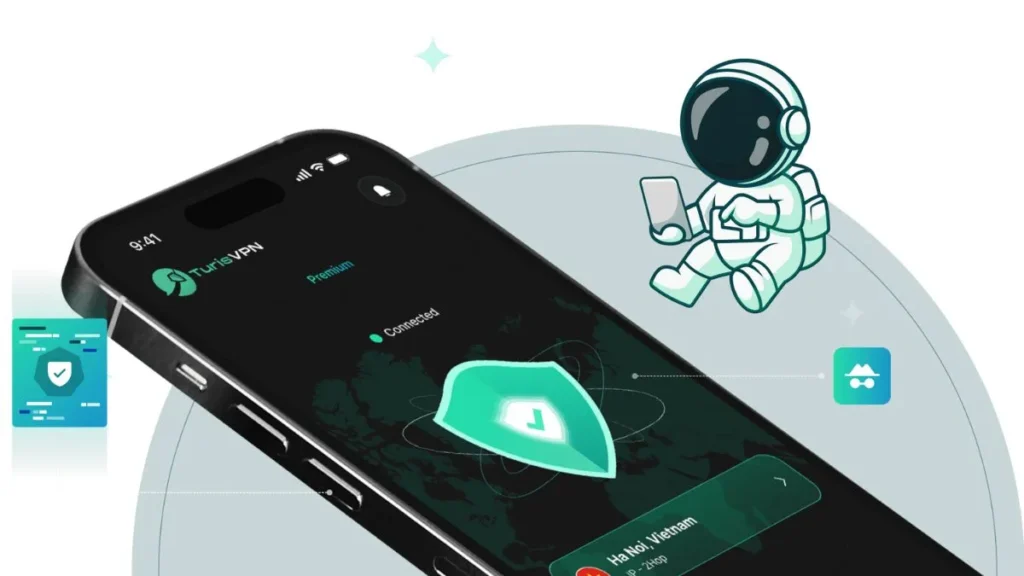
Step 1: Download TurisVPN
Visit the official TurisVPN website or get the app from your device’s app store (Google Play, Apple App Store, or browser extension).
Step 2: Log In or Sign Up
Open the app and log in with your existing TurisVPN account. If you’re new, simply sign up to create one in minutes.
Step 3: Choose a Server Location
For smooth streaming of Filipino content, select a VPN server close to the Philippines. Many users find that connecting via Singapore or Malaysia first, then switching to a Philippines server, improves routing and reduces buffering.
Step 4: Connect and Stream
Once connected, your internet traffic is encrypted and your IP address is masked. You can now use Startpage vs DuckDuckGo with an enhanced level of security.
Bottom Line
The choice between Startpage vs DuckDuckGo ultimately comes down to your personal priorities. If you value the quality and familiarity of Google’s search results but want to ditch the tracking, Startpage is an excellent choice. Its “Anonymous View” feature and EU jurisdiction are also significant advantages for the privacy-focused user.
If you prefer a more comprehensive privacy ecosystem with features like “!Bangs” and a dedicated privacy browser, and you want to completely de-Google your search experience, DuckDuckGo is a compelling option. Its commitment to transparency and user-friendly privacy tools has earned it a loyal following.
For the ultimate in online privacy, combining either of these excellent private search engines with a reputable VPN like TurisVPN will provide the most robust protection for your digital footprint.
FAQs
Q1. Is Startpage safer than DuckDuckGo?
Both search engines are significantly safer than mainstream options like Google or Bing. Startpage’s key privacy advantage is its EU location, which places it under stricter privacy laws, and it does not log any personal data. While some might argue this makes it marginally safer, users are even safer with VPN protection, as combining a VPN with either Startpage or DuckDuckGo ensures maximum privacy. Both search engines maintain strong no-logging policies for search queries and IP addresses.
Q2. Is it possible for someone to track you while using Startpage?
Startpage itself does not track you. It does not record your IP address or search history. However, once you click on a search result and leave Startpage (unless you use the “Anonymous View” feature), the website you visit can track you. Your ISP can also see that you are connecting to Startpage’s servers, though not what you are searching for. Using a VPN can prevent this.
Q3. Is Startpage still safe in 2025?
Yes, Startpage remains a safe and reputable private search engine in 2025. Despite its acquisition by an ad-tech company, Startpage has maintained its strong privacy policy and operates as an independent entity with its privacy decisions controlled by its Netherlands-based team. They continue to be transparent about their practices and are bound by EU privacy regulations. When looking at startpage search engine reviews, users consistently praise its commitment to privacy.