






Anime catalogs don’t look the same everywhere. Licensing agreements and region-locking decide what you can watch, which languages you get (subbed vs. dubbed), and whether episodes show up weekly or months later.
This 2026 update ranks the best anime sites to watch anime across legal premium platforms, legal free (ad-supported) services, and unofficial free sites (with clear risk notes). You’ll also see which platforms offer ad-free anime (usually paid tiers), which ones work best for subs vs dubs, and what to check when titles “vanish” due to regional licensing.
Key Takeaways
|
Best Free Anime Streaming Sites
Free anime sites are split into two buckets: legal, ad-supported services and unofficial apps/sites (often bigger catalogs, but higher risk of takedowns, fake clones, aggressive ads, and security issues). “Free” always comes with a trade-off. Use the breakdowns below to pick what fits your tolerance.
| Platform | Type | Pricing | Best for | Subs | Dubs | Main trade-off / watch-out |
| Anilab | Free anime app | Free | Fast “click & watch” on mobile | Widely available | Often available (varies by build) | Safety depends on using the official link and avoiding cloned builds with pop-ups/tracking |
| Tubi | Legal FAST (ad-supported) | Free (ads) | Safe, stable free anime on TV and mobile | Common (esp. older titles) | Strong for a free legal option | Smaller rotating catalog; region-based availability |
| RetroCrush | Legal FAST (classic-focused) | Free (ads) | Classic/retro anime (70s–90s) | Available | Very strong (vintage dubs) | Not for new seasonal releases; region limits |
| YouTube (official channels) | Legal (channel-based) | Free (ads) | Lowest friction + widest device support | Common | Some channels | Catalog is fragmented + can be region/time-limited |
| AnimePahe | Unofficial website | Free | Quick access and light UI | Primary focus | Limited | Domain changes, downtime, and higher exposure to fake mirrors/unsafe ads compared to legal platforms |
Anilab
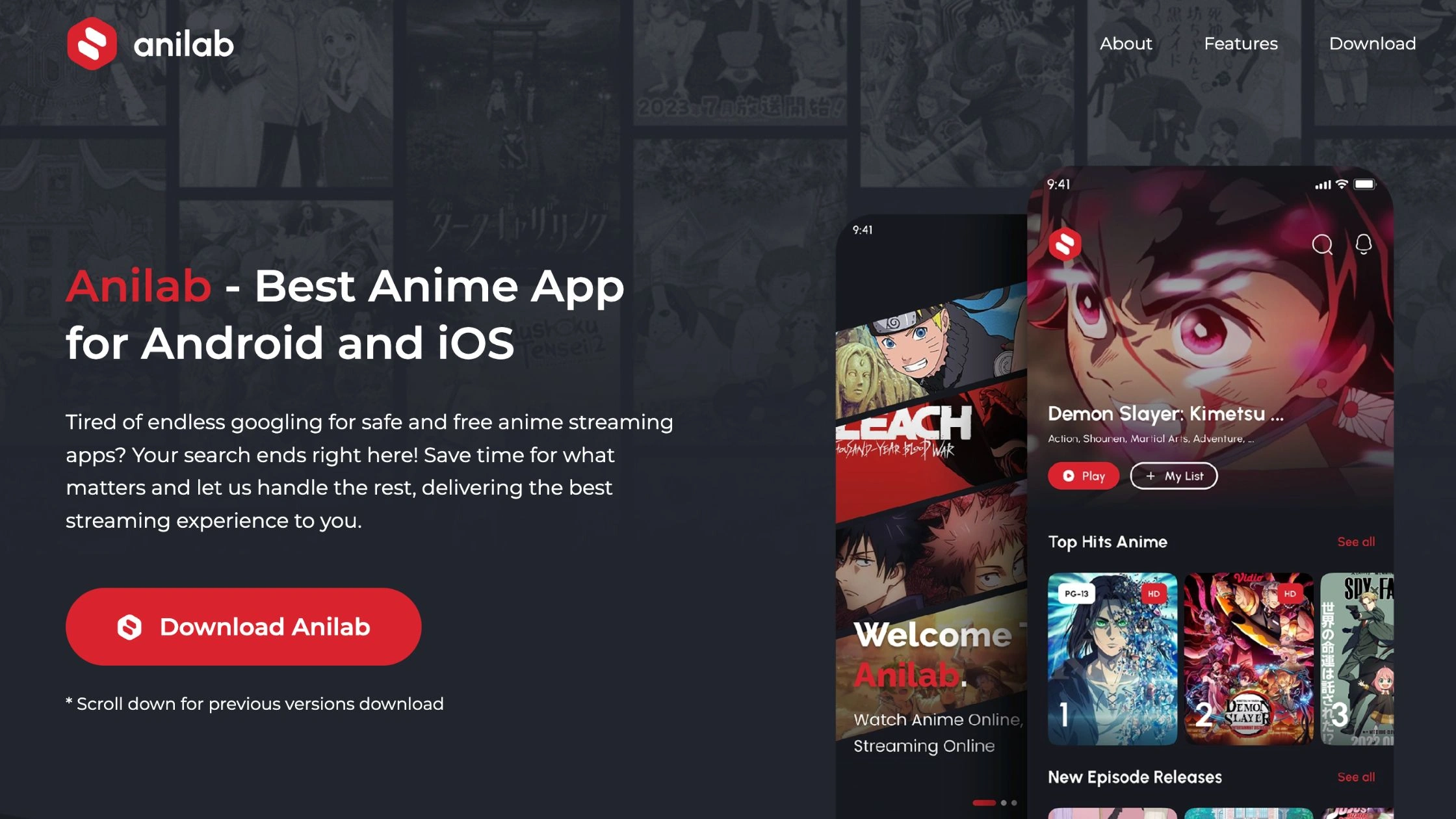
Anilab is a popular anime streaming app that offers a large catalog for free. There are a lot of options to stream and sometimes download episodes for offline viewing. The safety depends heavily on accessing the correct official link and avoiding cloned builds that imitate the name and UI.
Key features
- Large anime catalog with fast updates (varies by build/source)
- Often includes both subbed and dubbed versions
- Offline downloads (common feature in many builds)
- No account required in many versions
- Subbed anime: Widely available across most titles.
- Dubbed anime: Often available, but coverage depends on the app build/source.
Pros
- Feels “easy mode” for free anime: quick access, no signup
- Usually mobile-friendly, built for binge watching
Cons
- Higher risk of fake clones, intrusive ads, or bundled installers depending on download source (Some builds trigger pop-ups, redirects, or fake “Play / Download” buttons that lead to unsafe pages)
- Many copycat apps use the same name and look similar, but inject ads or tracking.
- No clear licensing, support, or accountability if something breaks
Pricing Free
Best for: Users who prioritize free access and convenience and are willing to accept higher stability and security trade-offs.
Tubi
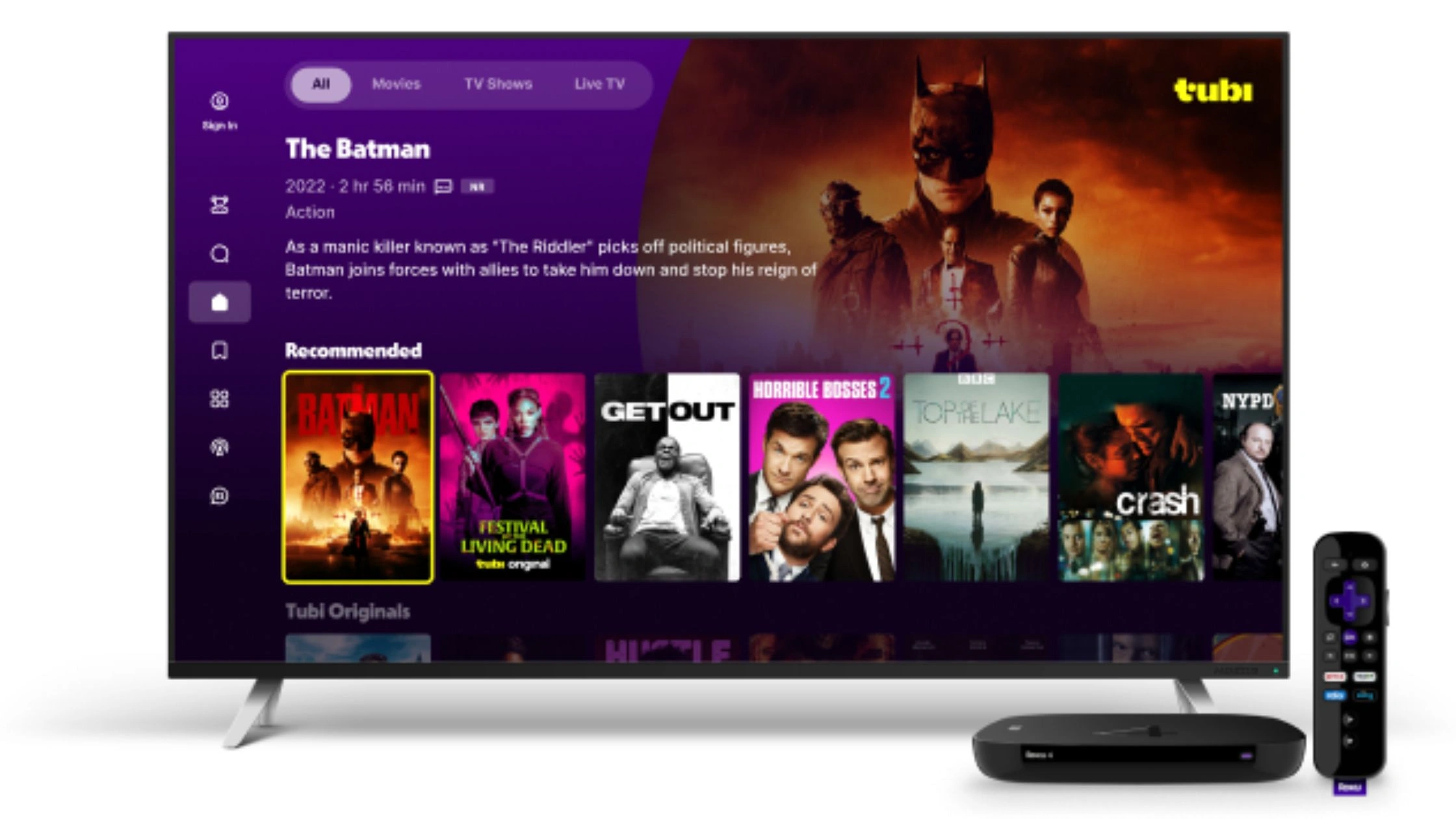
Tubi is a legal, ad-supported streaming service with a rotating anime selection. It’s one of the safer options because it operates under licensing agreements.
Key features
- 100% free (ad-supported)
- Apps on most devices (mobile, smart TV, web)
- Mix of classics + mainstream series (availability changes)
- Subbed anime: Available on many titles, especially older series.
- Dubbed anime: Stronger presence than most free legal platforms.
Pros
- Legal and stable compared with unofficial sites
- Works well on TVs and mainstream devices without tinkering
Cons
- Ads are part of the deal (no true ad-free free tier)
- Anime catalog varies by country and changes over time due to licensing
Pricing: Free (ads)
Best for: Viewers who want free, legal and low drama, and don’t mind ads or a smaller catalog than premium platforms.
RetroCrush
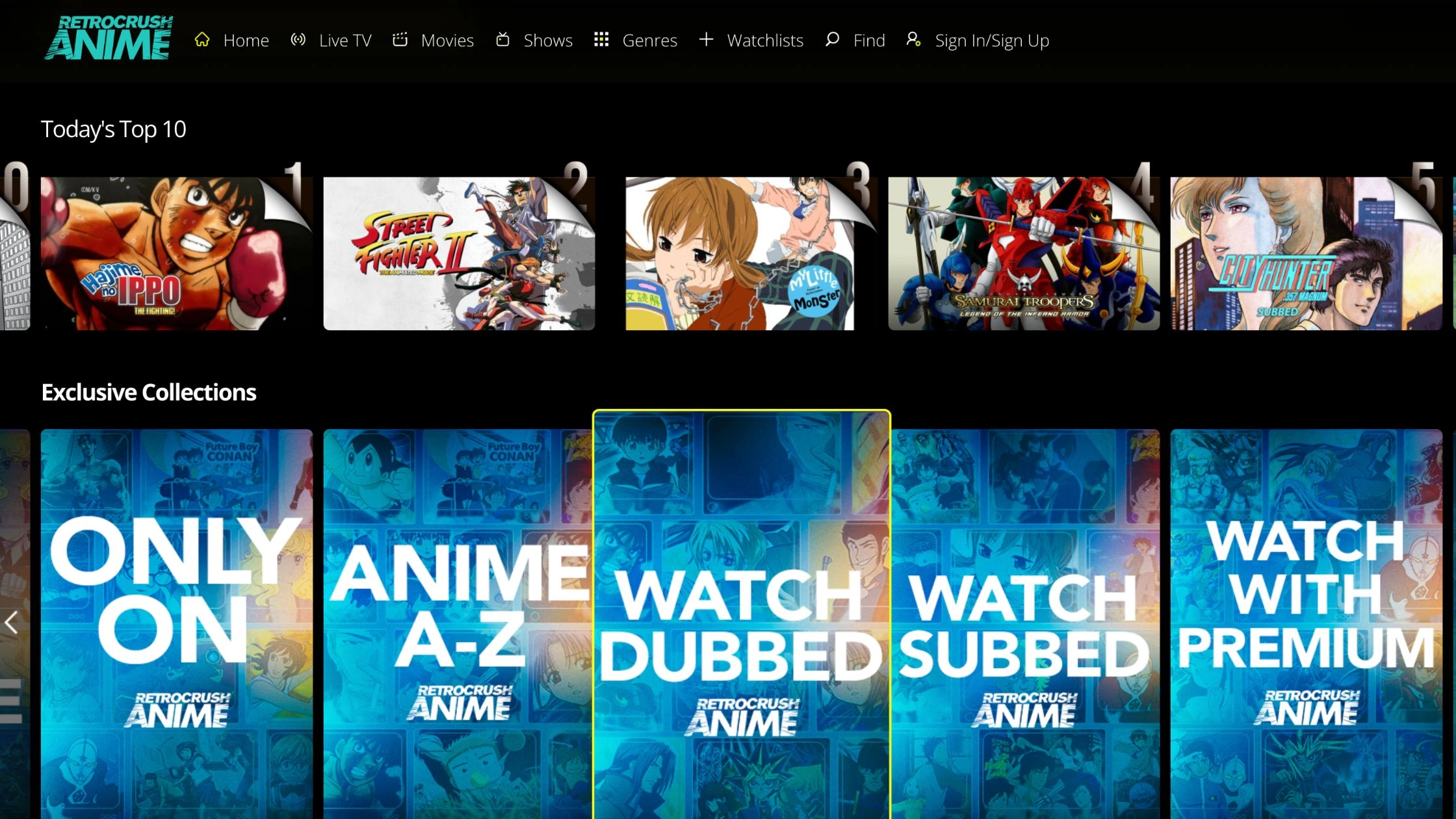
RetroCrush focuses on classic and “golden age” anime rather than the newest simulcasts. It’s a strong pick if you want curated older titles in a legal package.
Key features
- Retro-focused library (classic and cult titles)
- Free tier is ad-supported; premium may be available in some regions
- Web + supported streaming devices (availability varies)
- Subbed anime: Available, especially for lesser-known classics.
- Dubbed anime: Very strong focus, including vintage English dubs.
Pros
- One of the best legal homes for older anime
- Generally lighter “noise” than random free sites (cleaner experience)
Cons
- Not ideal for brand-new seasonal anime
- Smaller catalog than Crunchyroll/Netflix and may be region-limited
Pricing: Free (ads)
Best for: Retro fans who want classic anime legally without paying for a big all-purpose platform.
YouTube

Key features
- Official channels sometimes stream full episodes or full seasons
- Ad-supported, accessible on every device
- Often region-limited (different availability by country)
- Subbed anime: Common on official simulcast-style uploads.
- Dubbed anime: Available on some studio or distributor channels.
Pros
- Lowest friction: works anywhere YouTube works
- Legal when you watch via official publisher/studio channels
Cons
- Content can be region-locked or time-limited
- Catalog is fragmented across many channels; not one “library”
Pricing Free (ads)
Best for Casual viewers who want free legal episodes with maximum device compatibility.
AnimePahe
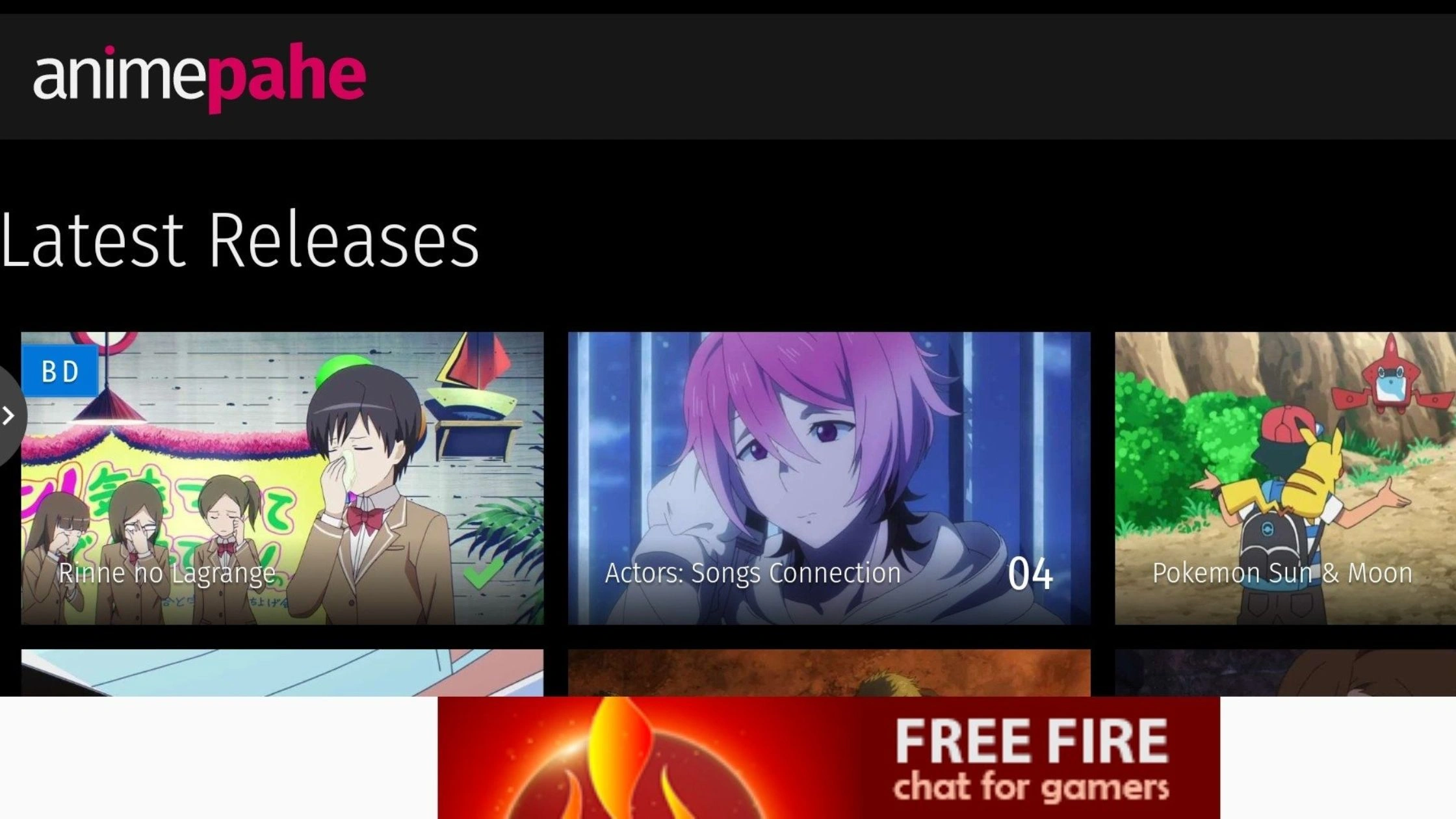
AnimePahe is a popular unofficial anime streaming site known for a clean layout and fast updates. It’s often used for convenience, but it’s not licensed, so availability and safety can be inconsistent.
Key features
- Large library with fast updates (varies)
- Typically subbed + some dubbed options
- Mobile-friendly web experience
- Subbed anime: Primary focus; most uploads are subbed
- Dubbed anime: Limited and inconsistent.
Pros
- Quick access without accounts on many builds
- Often lighter interface than “link directory” sites
Cons
- Unofficial: takedowns, domain changes, sudden downtime
- Higher exposure to malicious ads/popups or fake mirrors compared with legal platforms
- No DRM, licensing, or user protections you get from legal services
Pricing: Free
Best for: Users who accept higher risk and want fast access, but it’s not the right pick if you care about stability, safety, or staying fully legal.
Top Legal Anime Streaming Sites
Legal platforms win on stability, consistent video quality, and lower security risk. The trade-off is real: licensing agreements and region-locking can remove titles from your library when you travel, and DRM (Digital Rights Management) can sometimes trigger playback limits or device restrictions.
HIDIVE
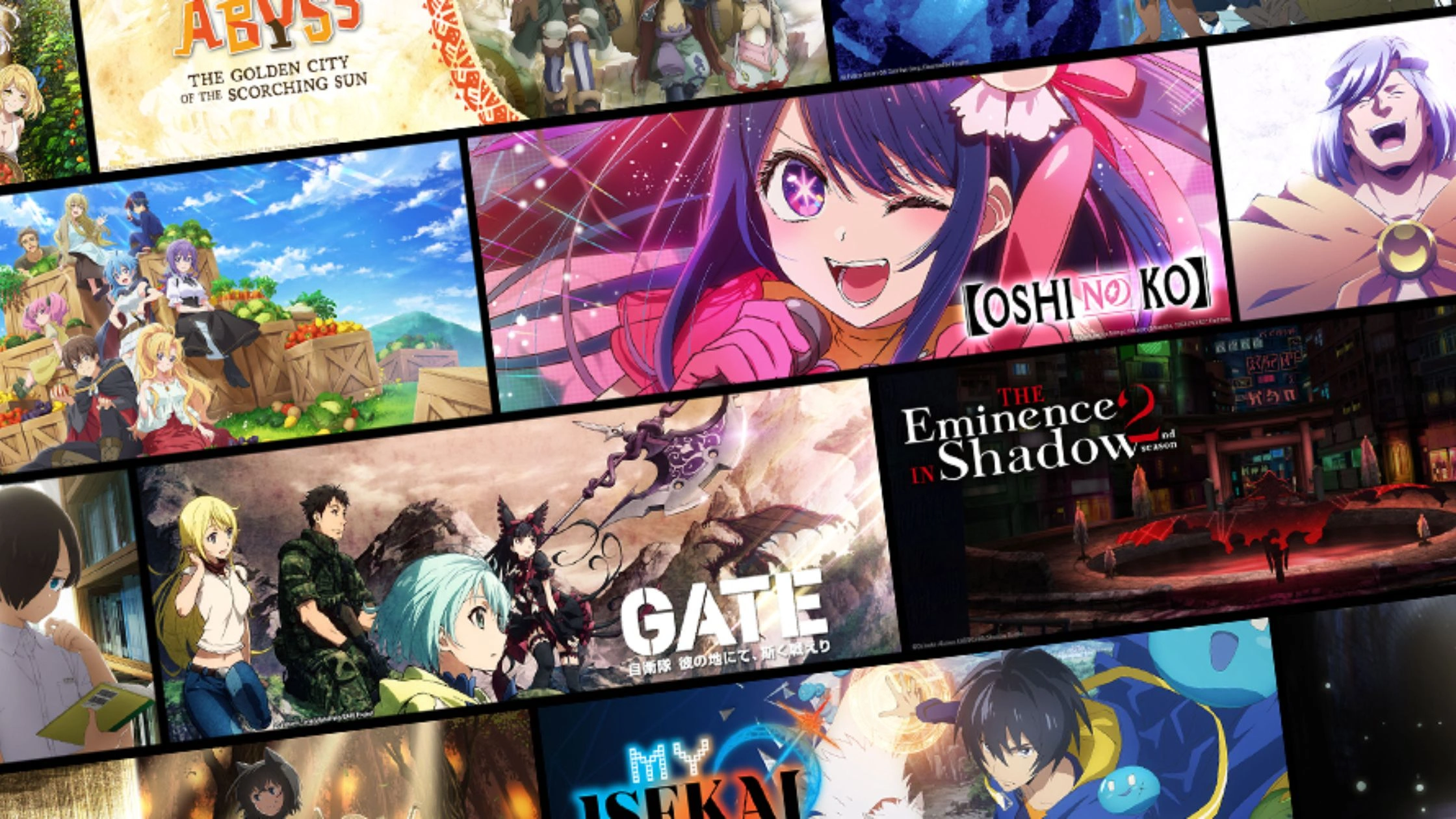
HIDIVE is a legal anime streaming service operated by Sentai Filmworks (an AMC Networks company). It’s built for fans who want a more curated catalog, including exclusives tied to Sentai licenses and partner deals.
Key features
- Curated anime catalog with exclusives via Sentai Filmworks licensing
- Subbed and dubbed options (library varies by region)
- Generally lighter, more “anime-first” than big general streamers
Pros
- Strong pick when you want niche titles you won’t always find on Netflix/Hulu
- Legal streams with predictable uptime vs. unofficial sites
Cons
- Smaller catalog than Crunchyroll/Netflix
- Availability and features can vary by country due to licensing/region-locking
Pricing: Paid subscription: $5.99/month
Best for: Anime fans who want curated exclusives and don’t need the biggest mainstream catalog.
Netflix
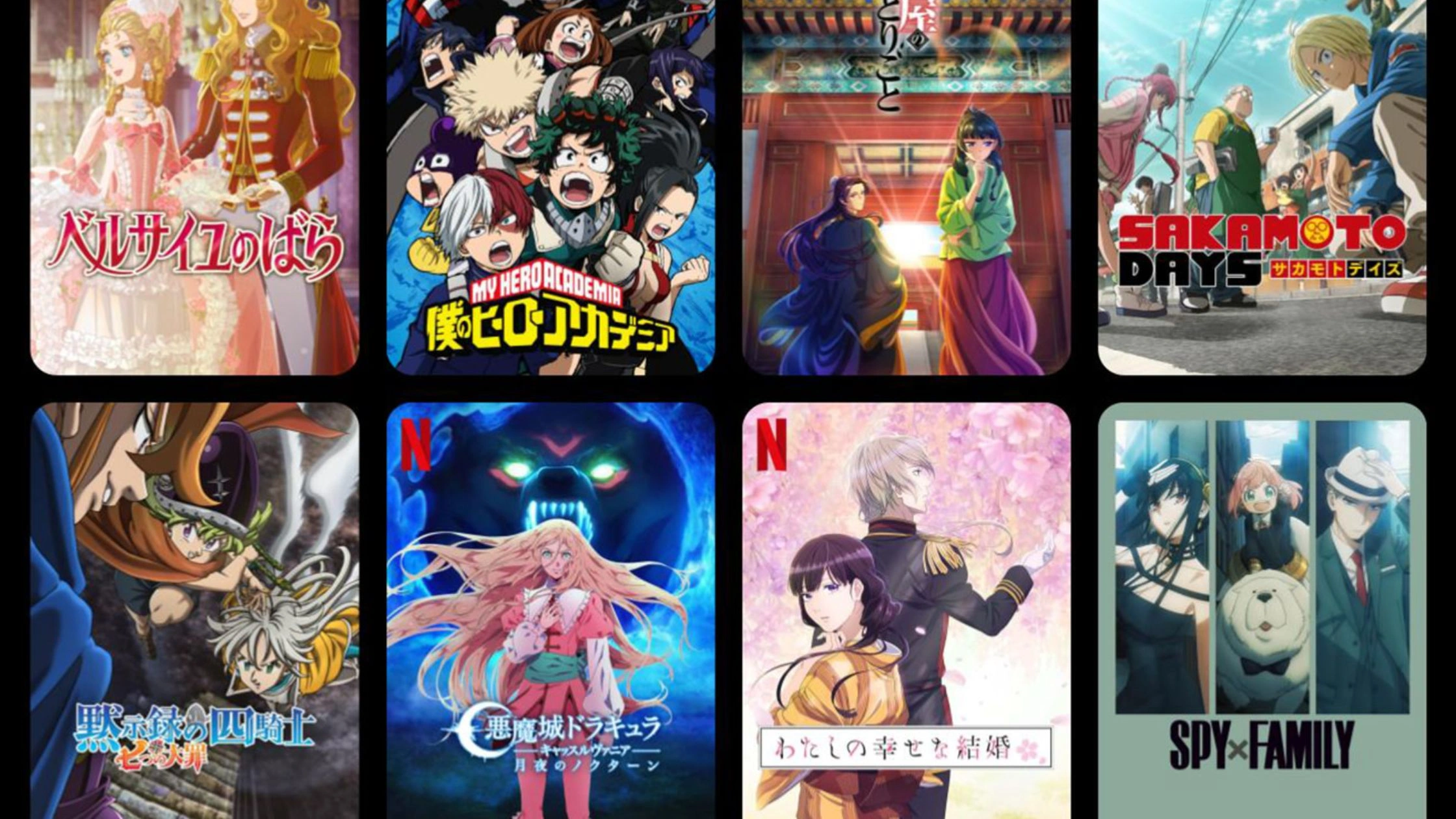
Key features
- Strong dub support + multiple subtitle options (varies by title/region)
- High-quality streaming on nearly every device
- Big “binge drop” model more than weekly simulcasts
Pros
- Excellent dub experience and overall playback stability
- Great for viewers who want anime plus mainstream TV/movies in one subscription
Cons
- Not the best for weekly seasonal simulcasts
- Catalog changes heavily by region because of licensing agreements
Pricing: $7.99/ month
Best for: Viewers who prefer dubbed anime, polished UX, and binge watching.
Hulu

Hulu is a major legal streamer in the U.S. with a strong anime library mix (popular series and ongoing availability through licensing). It’s a great “bundle” option if you already use Hulu for non-anime content.
Key features
- Subbed and dubbed options (varies by title)
- Ad-supported and no-ads plans
- Strong device support and stable streams
Pros
- Strong value if you already want Hulu for general streaming
- Solid catalog of well-known shows, with reliable playback
Cons
- Region-locking is a big limitation (primarily U.S. availability)
- “No ads” costs more; ad-supported plan can feel heavy for binge sessions
Pricing: $9.99/month
Best for: U.S. viewers who want anime and mainstream TV in one subscription.
Amazon Prime

Prime Video is a legal platform with anime spread across included titles, rentals, and add-on “channels” depending on the country. It’s convenient if you already pay for Prime, but anime discovery can feel fragmented.
Key features
- Prime Video library, rentals and optional add-on channels
- Wide device support
- Region-based catalogs (licensing-driven)
Pros
- Convenient if you already subscribe to Amazon Prime
- Some anime appears as exclusives or bundled availability depending on region
Cons
- Anime catalog can be inconsistent across regions
- Prime Video includes ads in many markets; ad-free may cost extra
Pricing: $8.99/month
Best for People who already have Prime and want anime as a bonus, not their main library.
Crunchyroll
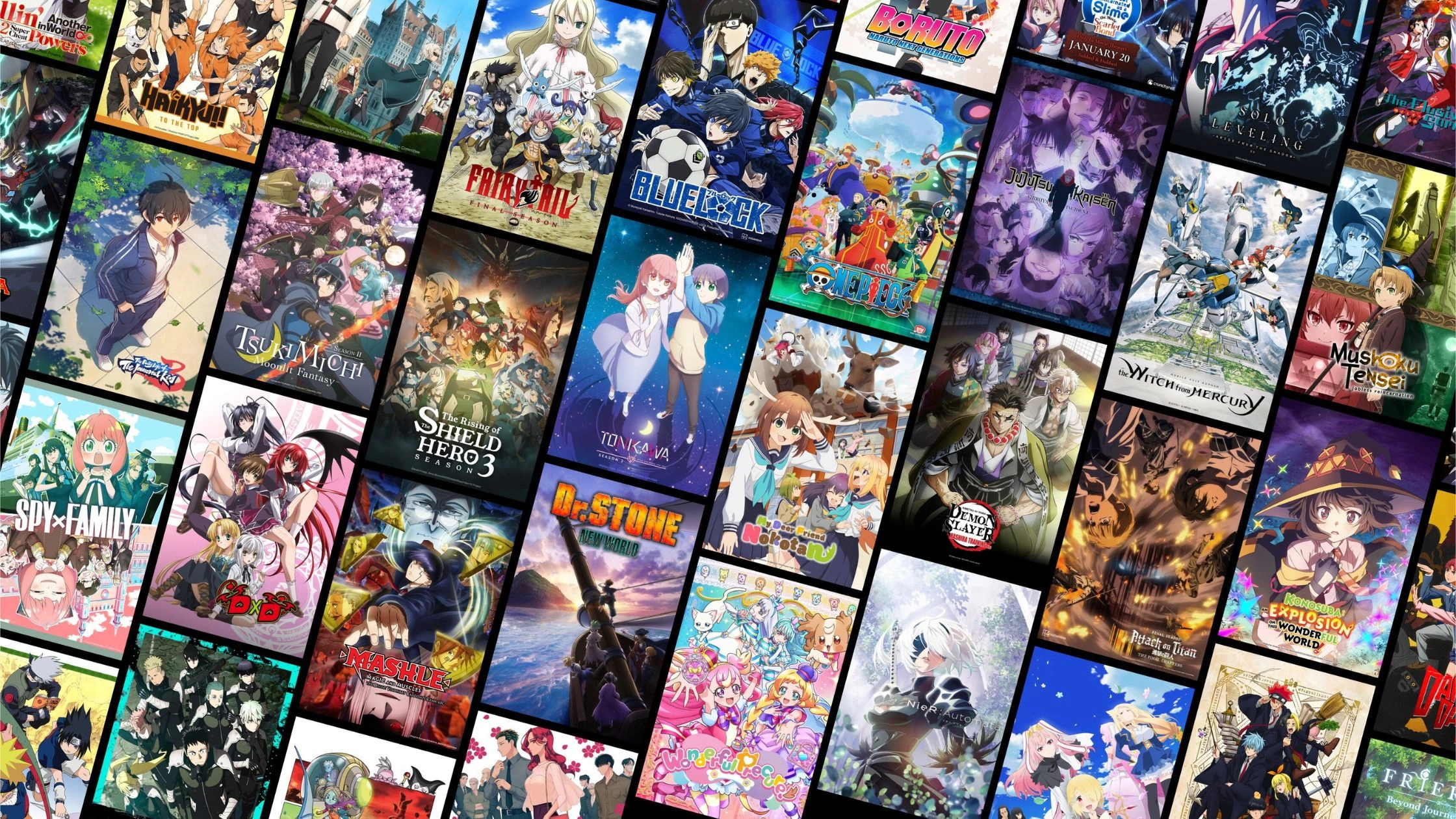
Crunchyroll is the most anime-focused legal platform for seasonal releases, with a deep catalog and strong sub-first coverage. It’s part of Sony’s anime business and is typically the go-to pick for simulcasts and breadth.
Key features
- Massive anime-first catalog and seasonal releases
- Multiple premium tiers (features vary by tier)
- DRM-protected official streaming, stable apps across devices
Pros
- Best “all-in” option if anime is your main content
- Strong for subs and fast releases vs. general streamers
Cons
- Region-locking still applies (catalog differs by country)
- Free, ad-supported access ended at the end of 2025, so paid membership is now the default for streaming
Pricing $7.99/month
Best for: Fans who want the widest anime catalog and seasonal coverage on a legal platform.
Sub vs. Dub: Which is Right for You?

Subbed vs. dubbed comes down to one question: Do you want the original performance, or the easiest viewing experience? Most “best anime sites to watch anime” let you switch between both, but availability depends on licensing agreements and region catalogs so the same show can have subs only in one country and a full dub in another.
Subbed (Sub): best for authenticity and faster releases
Choose subbed if you want:
- Original voice acting and tone. You get the performance as it was produced in Japan, including nuances that don’t always translate cleanly.
- Faster episode availability. Seasonal releases often appear in subs first, especially on anime-first platforms like Crunchyroll.
- More consistent coverage. Even when a dub exists, it might not be licensed in your region, while subs are more widely available.
However, you’ll read while watching. If you’re tired, multitasking, or watching on a small screen, subbed can feel like work.
Dubbed (Dub): best for comfort and accessibility
Choose dubbed if you want:
- Easier binge watching. You can follow the story without staring at captions nonstop.
- Better accessibility. Dubs help viewers who struggle with fast reading, visual processing, or simply want a lower-effort watch.
- A “TV-friendly” experience. Dubs are great when you’re watching with family, eating, or doing something else.
But, Dubs can arrive later than subs, and some titles never get dubbed (or only get dubbed in certain regions). Netflix Anime is often strong here, but it still varies by title and country.
The right choice is the one you’ll actually stick with. If you care most about speed and seasonal drops, go subbed. If you care most about comfort and accessibility, go dubbed. Many viewers switch depending on the show, mood, and where they’re watching.
- Pick Sub if: you want the original performance, you watch weekly seasonals, or the dub isn’t available.
- Pick Dub if: you binge, multitask, watch with others, or want the easiest viewing experience.
- Pick Both if: you watch subbed for new episodes, then rewatch dubbed later for comfort.
How Region Locking Affects Your Streaming Experience
Region locking (geo-blocking) limits what you can stream based on your IP location. The same subscription can feel completely different from country to country because platforms must follow copyright law and local licensing agreements. That’s why a “best anime streaming website” in the U.S. may look weaker (or totally different) when you open it in Vietnam, Europe, or Australia.
Streaming rights are sold by territory. Platforms like Netflix Anime, Crunchyroll (Sony), Hulu, Disney+, and Amazon Prime Video can only show titles in regions where they’ve secured distribution rights. Those rights expire, change hands, or get split across services so catalogs shift constantly.
If you’ve ever tried to stream region-restricted channels while traveling, you’ve probably seen similar licensing limits. For example, even general TV platforms like Hallmark Channel are restricted outside the U.S.
You’ll usually see one of these problems:
- “Not available in your region” or a title missing from search results
- A show exists, but seasons/episodes are missing
- Subbed vs. dubbed options change by country (dub may disappear, subs may change languages)
- Release timing differs (weekly episodes in one region, delayed or absent in another)
- Playback restrictions can stack with DRM (Digital Rights Management) on certain devices
Region locking is why “best” depends on your location and travel habits:
- Hulu is strong for anime in the U.S., but it’s heavily limited outside it.
- Netflix can be excellent for anime originals and dubs, but the anime catalog varies widely by country.
- Crunchyroll is anime-focused, yet specific titles can still be unavailable in some territories.
- Disney+ and Prime Video often have anime availability that’s highly region-dependent, with titles appearing or disappearing based on local deals.
Don’t assume the platform “removed it forever.” Usually it’s a rights or territory issue.
- Search the title on the platform again (sometimes it’s under a different page/season listing)
- Check subtitle/dub settings (language options can change by region)
- Use legal free sources for backups (e.g., official YouTube channels when available)
- Download episodes for offline viewing before traveling if your service supports it
- If it’s a must-watch, consider whether another licensed platform in your region carries it
Region locking is annoying, but it’s a normal part of legal streaming. Next, I’ll explain how to think about TurisVPN in a safe way, focused on privacy and security while streaming, not “workarounds.”
How TurisVPN Helps with Region Locking
Region locking is driven by licensing agreements, so it isn’t something a VPN can “fix” permanently. Some platforms will still show different catalogs by country, and many services actively detect VPN traffic. Use TurisVPN as a privacy and security tool especially on public Wi-Fi or while traveling, not as a guaranteed way to unlock every title.
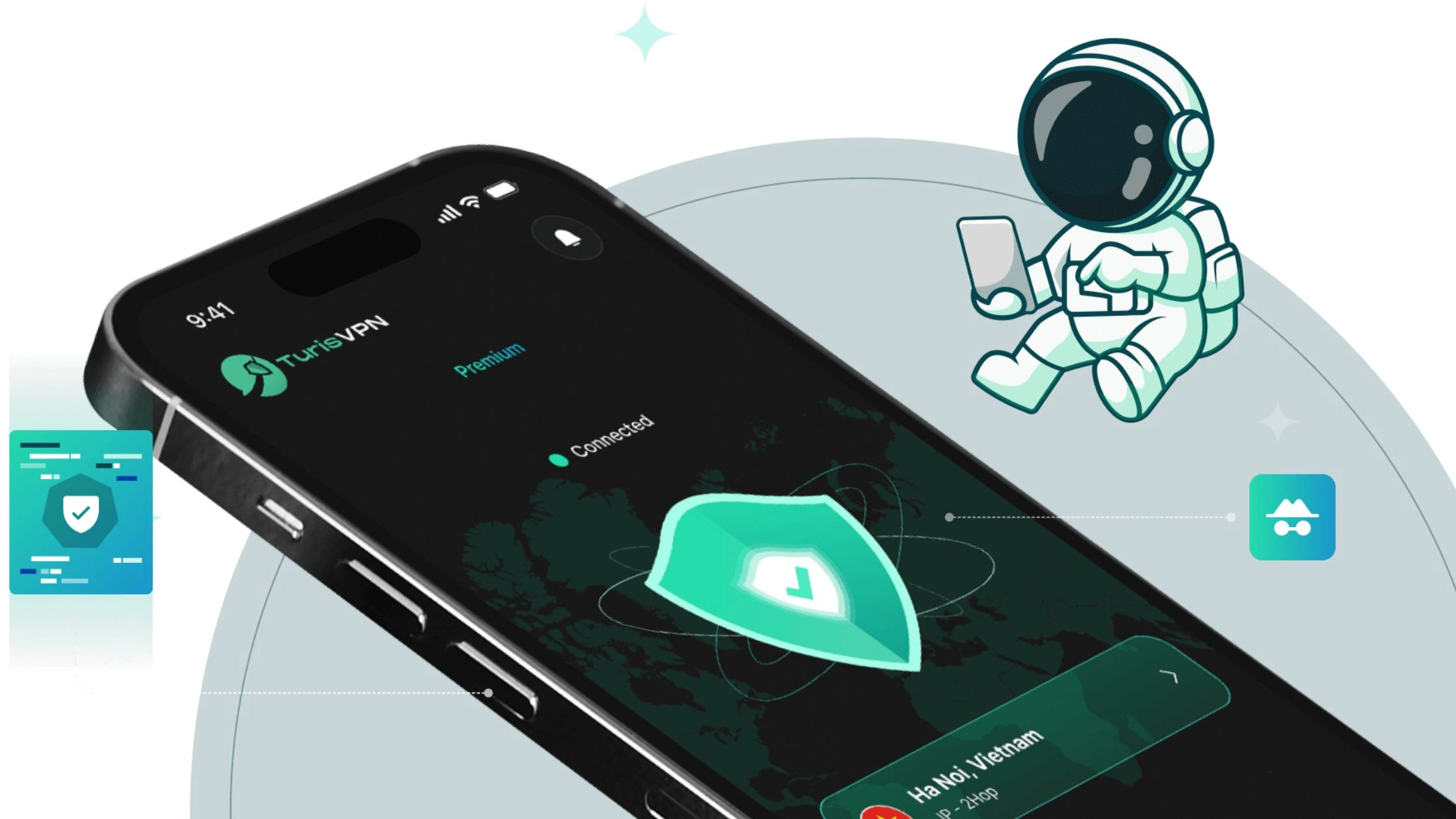
What TurisVPN helps with
- More consistent streaming experience while traveling: Your connection stays encrypted, which is useful on hotel or café Wi-Fi.
- Privacy protection: A VPN hides your IP from websites and reduces basic tracking tied to location.
- Safer browsing around free directories: If you’re visiting ad-heavy pages, a VPN adds a layer of protection for your network traffic (it doesn’t make risky sites “safe,” but it reduces exposure on the connection side).
Safer browsing around free directories. If you’re considering a VPN for streaming, it’s important to understand the difference between paid vs free VPN services, especially in terms of speed, data limits, and privacy practices.
Important limits (read this)
- A VPN does not guarantee access to region-locked anime catalogs.
- Streaming services may block VPN connections or require extra verification.
- Always follow the platform’s Terms of Service and local laws.
TurisVPN setup steps
- Install TurisVPN: Use the mobile app on phone/tablet. On PC, use the browser extension
- Sign in and enable key protections: Turn on any privacy/security toggles available in settings (if shown).
- Connect to a VPN location: Pick a server location that fits your needs (privacy, stability, nearby routing), then connect.
- Refresh your streaming app: Close and reopen the streaming app/site. If you still see “not available,” the title is likely not licensed for that region or the service may be restricting VPN traffic.
Common Anime Streaming Issues
Anime streaming problems usually come from three places: your connection, the platform’s servers, or content restrictions (licensing and DRM). Use the list below to diagnose the issue fast and pick the right fix. Key technical and service issues.
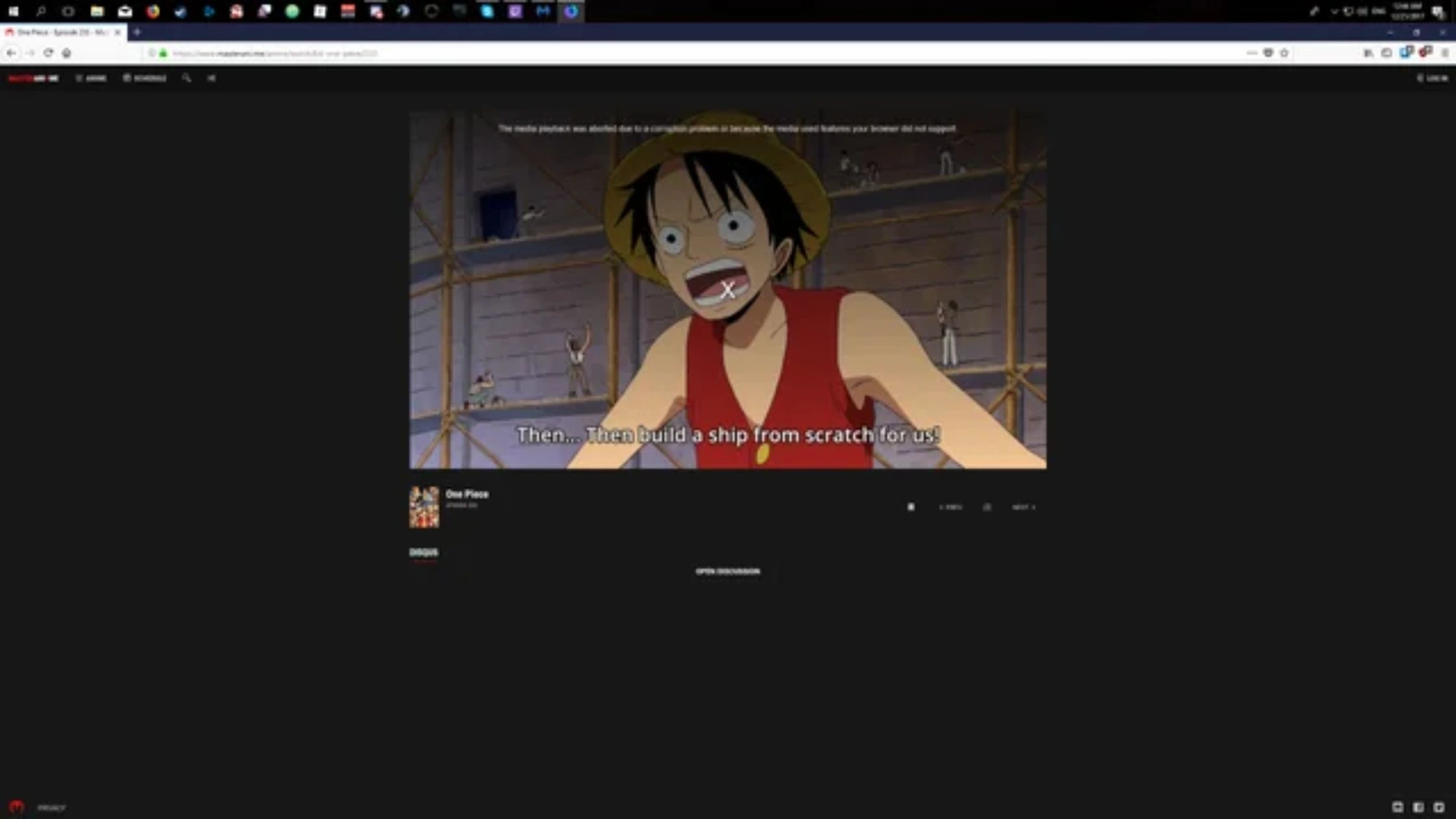
1) Buffering, freezing, or endless loading
- Why it happens: slow internet, Wi-Fi congestion, overloaded servers during new-episode drops, or unstable CDN routes.
- Most common on: high-traffic moments (season finales, big premieres), crowded Wi-Fi.
2) Low video quality (stuck at 360p/480p)
- Why it happens: adaptive bitrate drops due to network instability, data saver mode, or device limits.
- What it looks like: quality won’t increase even when your speed is fine.
3) “This title isn’t available in your region”
- Why it happens: region-locking from licensing agreements and local rights.
- What it looks like: missing seasons/episodes, title doesn’t appear in search, or blocked playback.
4) Subtitle problems (out of sync, missing, wrong language)
- Why it happens: player bugs, cached subtitle files, regional subtitle tracks, or mismatched episode versions.
- Common pain: on-screen text translations missing or inconsistent.
5) Audio issues (no sound, wrong track, dub/sub mismatch)
- Why it happens: wrong audio track selected, device audio routing, or platform metadata bugs.
- What it looks like: Japanese audio only, dub missing, or audio delays.
6) DRM playback errors
- Why it happens: Digital Rights Management (DRM) restrictions, outdated browsers, blocked Widevine/DRM modules, or device policy limits.
- What it looks like: black screen, “playback not supported,” or errors only on one browser/device.
7) Login failures or forced logouts
- Why it happens: expired sessions, app bugs, password manager conflicts, or too many devices on one account.
- What it looks like: “something went wrong,” loops back to login, or random sign-outs.
8) Ads overload, pop-ups, or fake buttons (mostly on unofficial sites)
- Why it happens: aggressive ad networks, redirects, and mirror domains.
- Risk note: some ads are designed to look like “Play” or “Download” buttons.
9) Stuttering / judder on TV (motion doesn’t look smooth)
- Why it happens: frame rate mismatch (24fps/30fps content on 60Hz screens), device motion smoothing settings, or weak hardware decoding.
Troubleshooting steps (quick fixes that work on most platforms)
Step 1: Refresh the basics
- Reload the page / restart the app
- Check if the platform is down (community reports can confirm outages)
Step 2: Fix browser/app cache problems
- Clear cache/cookies (browser)
- Clear app cache (mobile)
- Try a different browser (Chrome/Edge/Safari)
Step 3: Test your network
- Switch Wi-Fi ↔ mobile data
- Restart router
- Move closer to the router (avoid congested bands)
Step 4: Check settings inside the player
- Manually set video quality
- Switch subtitle language / audio track (Sub vs Dub)
- Turn off data saver mode if enabled
Step 5: Handle DRM issues
- Update the browser/app
- Disable strict privacy extensions temporarily (if they break DRM players)
- Try another device (DRM behavior differs across devices)
Step 6: Ads and redirects
- Stick to official apps/sites when possible
- Avoid clicking “download/play” lookalikes on free, unofficial pages
- If a site opens multiple tabs automatically, treat it as a risk signal
Bottom Line
Best” depends on what you value most: legal safety, price, seasonal releases, dubs, or a retro catalog. If you want the most reliable experience, stick to licensed platforms that operate under copyright law and use DRM: fewer dead links, fewer security risks, and better video quality.
If you’re searching for free anime sites in 2026, start with legal free options like Tubi, RetroCrush, and official YouTube channels. They’re ad-supported and catalogs can rotate, but the risk is far lower than unofficial sites. Unofficial apps and sites may look convenient, but they come with real trade-offs: instability, takedowns, aggressive ads, and higher security exposure.
FAQs
1. What is the best anime streaming website in 2026?
Crunchyroll is the best overall pick for most anime fans because it’s anime-first, licensed, and has the deepest catalog plus strong seasonal coverage. If you care more about dubs and binge-watching, Netflix is often the better fit.
2. What are the best anime sites to watch anime legally?
Top legal options: Crunchyroll, Netflix Anime, HIDIVE, Hulu (U.S.), and Amazon Prime Video. These platforms follow licensing agreements and copyright rules, so they’re more stable and safer than unofficial sites.
3. What are the best free anime sites in 2026?
Best legal free options: Tubi, RetroCrush, and official YouTube channels that stream licensed episodes. They’re ad-supported and catalogs rotate, but they’re the lowest-risk “free” choices.