







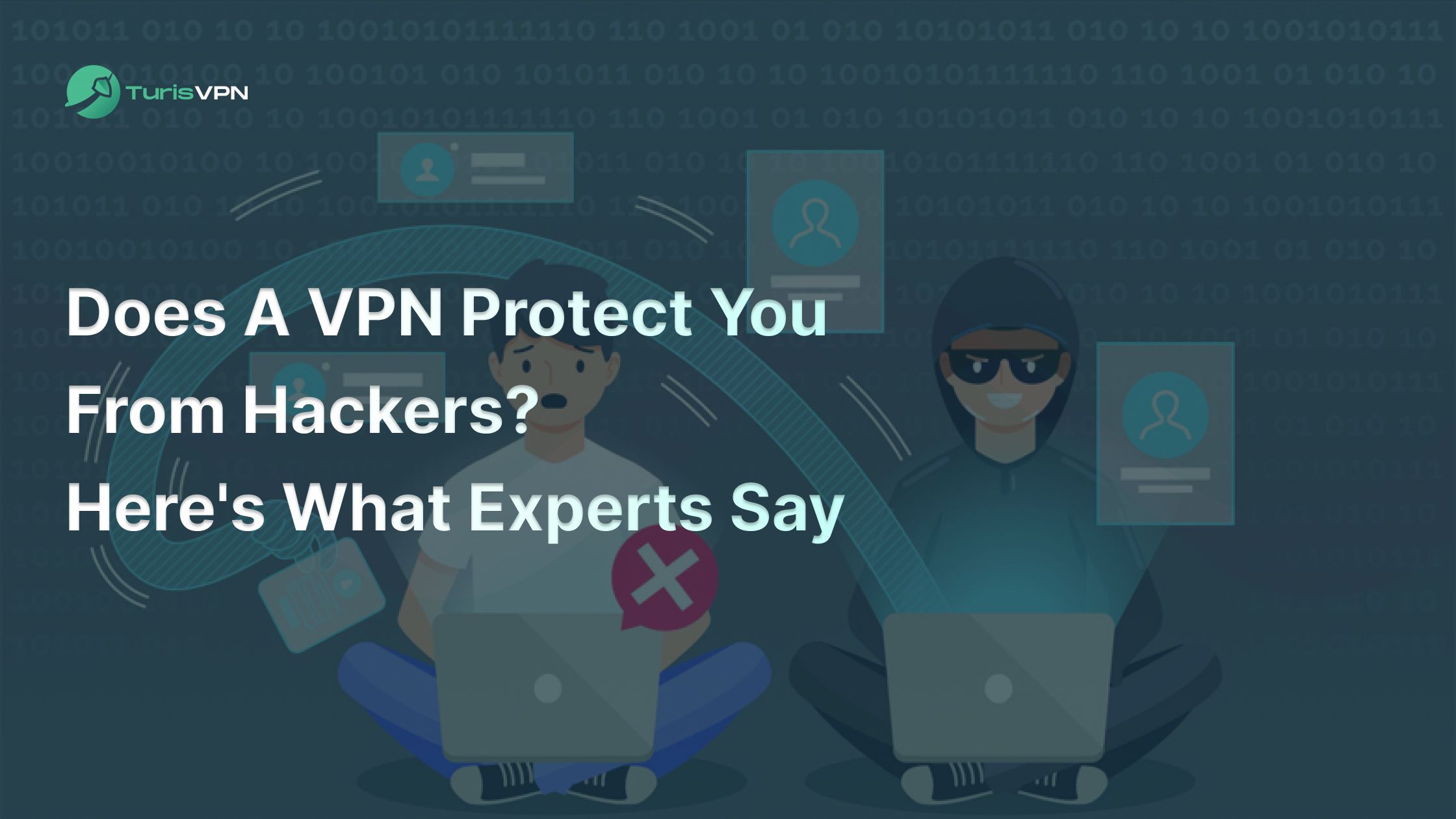
Many people fear the quickly changing digital world of today, “Does a VPN protect you from hackers?” Experts depend more on VPNs (Virtual Private Networks) to safeguard important data and hide online behavior as internet security risks expand and criminals diversify.
Our thorough article today will explain how a VPN protects you from cyber-attacks and assess how effective VPNs are. More importantly, we also discuss essential features to help you decide whether this product is right for you. Let’s scroll down now!
Although they are not a cure-all, VPNs are quite good at stopping some types of internet crimes. A VPN can help to avoid some typical risks, including:
- Man‑in‑the‑Middle Attacks: VPN encryption can reduce the risk of intercepted data being readable by up to 99%, ensuring that even if data is captured, it remains scrambled and secure.
- Identity Theft: By masking your IP address, VPNs lower the chance of exposing sensitive information, studies suggest they can decrease identity theft risk by approximately 90%.
- Tracking and Surveillance: With a VPN, the likelihood of unauthorized tracking or surveillance drops by around 75%, allowing for a more private and secure online experience.
Use a reputable VPN service to help many of these problems go away while you decide if “Does a VPN protect you from hackers?“
Furthermore, if you have ever wondered, “What does a VPN do for security?” the encryption and no-logs regulations of a VPN serve to defend against these same risks.
Remember always that keeping best practices is more important than even a VPN improving security by shutting numerous possible holes.
The Common Cyber Threats A VPN Can’t Prevent
Although VPNs are quite effective, they are not a complete security fix. Just as crucial as knowing their abilities, is knowing their limits. VPNs won’t shield you from:
- Malware and Ransomware: Ransomware and malware call for specific antivirus and antialware programs to identify and eliminate destructive programs.
- Phishing Attacks: VPNs cannot protect you should you willingly supply private data to a phony website.
- Social Engineering: Cybercrime typically takes advantage of human behavior, a strategy not covered by VPN technology.
Although lots of people wonder, “Does a VPN protect you from hackers?” it’s important to realize that some dangers call for complimentary security solutions.
For instance, a popular concern highlighting VPN limits is “How to know if your VPN is hacked?” Add additional cybersecurity best practices to augment your VPN security for total safety.
Although a safe VPN is a big start in resisting many kinds of attacks, keep in mind that it has to be part of a layered defense. No one solution, in fact, can totally protect you from every cyber threat.
Is TurisVPN Safe? How It Protects You From Hackers
Enable two-factor authentication
By seeking an additional verification step, two-factor authentication (2FA) even further protects your accounts. This means your account is safe even if a hacker gets your password.
This habit complements “How do VPNs protect you?” by creating another layer of defense against hacker efforts.
Invest in ad-blockers
Ad blockers prevent malicious ads and pop-ups that might lead to phishing sites or malware. They reduce your exposure to online threats and support the efforts of limiting potential attack vectors.
Maintain Software Updates
Regular updates patch security vulnerabilities. Keeping everything updated guarantees that there isn’t another weak area for attackers to take advantage of, whether it’s your operating system, browser, or antivirus program.
Bottom Line
In an ideal digital environment, every security layer counts. Then, “Does a VPN protect you from hackers?” Yes, a correctly configured VPN reduces your cyber attack risk.
VPNs should be used in conjunction with strong passwords, antivirus software, frequent updates, and safe online conduct.
The experts suggest that while a VPN isn’t a silver bullet for security, it provides valuable protection in an uncertain online environment.
Following the best practices above assures that even if you don’t have much knowledge about how to protect yourself from hackers, you can still stay proactive in cybersecurity.
FAQs
Q1. Can a VPN be hacked?
Although no technology is perfect, respectable VPN providers use cutting-edge security techniques to guarantee that the likelihood of a breach is almost nonexistent. The danger is much lowered by means of modern encryption, safe systems, and frequent audits.
Q2. How to know if your VPN is hacked?
You should always be watching your connection for unusual activity. Some telltale signs can include unexpected disconnections, rapid declines in connection speed, or suspicious network activities. Simply said, using scanning security logs and network monitoring tools will assist. “How to know if your VPN is hacked?” should inspire you to act right away should any abnormalities show up.