






The threat of FedEx scams is a growing concern for millions of people worldwide. As one of the most trusted names in global logistics, FedEx is a prime target for cybercriminals looking to exploit that trust. These malicious schemes can take many forms, from text messages to sophisticated phishing emails.
We are committed to empowering you with the knowledge to recognise, avoid, and report these fraudulent activities. Protecting your privacy and financial security is our top priority. Understanding the common tactics used in a FedEx scam is the first step toward staying safe online.
What Are FedEx Scams?
FedEx scams are fraudulent attempts by criminals posing as the legitimate shipping company. The goal of these schemes is to trick you into revealing sensitive personal or financial information or to install malware on your device.
Scammers use the familiar FedEx logo and branding to make their messages look authentic, often capitalising on the urgency of a “missed delivery.” Common tactics used in these scams include:
- Fake Tracking Links
- Spoofed Sender Addresses
- Payment Demands
- Urgent “Delivery Failure” Alerts
Since FedEx never asks for payments or sensitive information through unofficial channels, such requests should be treated with suspicion. Recognising these specific scam tactics helps differentiate genuine communications from dangerous fraud attempts.
Why are FedEx Scams Increasing?
The surge in fraud is fueled by the explosion of online shopping, specifically during seasonal peaks when delivery anxiety is high. Scammers take advantage of the deep user trust in the FedEx brand, leaving unsuspecting consumers vulnerable to exploitation by mimicking official communications.
On the technical side, the barrier to entry has crumbled. The low cost to execute scams allows even unsophisticated criminals to launch attacks. By utilising automation and bots, they achieve the scalability needed to broadcast thousands of FedEx scams by text or email simultaneously.
This efficiency, combined with easily accessible stolen data and AI-generated content, allows attackers to craft highly convincing, personalised traps with minimal effort. Recognising these trends is essential to staying protected and avoiding falling prey to these scams.
8 Signs of FedEx Scams
Spotting red flags early can prevent loss and protect your privacy from FedEx scams. Let’s break down the eight most common warning signs.
Unexpected Requests for Money or Information
Scammers demand payment for customs, re-delivery, or urgent processing. Legitimate FedEx communications will almost never ask for money via an unsolicited message. Real charges are handled through the official website.
How to Spot: If a text or a FedEx scam calls you asking for your credit card or bank details, it is a scam. FedEx does not demand financial data this way. Go to fedex.com and check your tracking number to confirm any charges.
Sense of Urgency or Threats
Many FedEx scams use pressure tactics. They claim you need to act fast or face consequences, like a package being returned. This urgency tries to cloud your judgment and force a quick response.
How to Spot: Be suspicious of messages using phrases like “Immediate action required” or “Your package will be returned in 24 hours.” Legitimate processes are not high-pressure. A strong deadline is a red flag.
Suspicious Links/Attachments
Fake delivery notifications often contain links that lead to phishing websites designed to steal your personal or financial information. Attachments may be disguised as “invoices” or shipping documents, but actually contain malware that can infect your device the moment you engage with them.
While unrelated, malicious ads or links are also frequently found on unsafe streaming sites, such as Streameast, a reminder that caution is needed across many online platforms.
How to Spot: The destination URL is the clearest indicator of fraud. While official messages use a clean fedex.com domain, scam links are frequently cluttered with typos, odd punctuation, or completely different domain names.
Misspelled Email Addresses or URLs
Authentic FedEx emails use the @fedex.com domain. Scammers use variations like fedx.com to trick users. This is called typo-squatting.
How to Spot: Look closely at the sender’s full email address. If the domain appears slightly off, it is a scam designed to mimic FedEx phishing emails.
Poor Grammar and Spelling
Fraudulent messages often include awkward phrases or glaring grammatical mistakes. Well-constructed communications from a major company like FedEx do not contain these errors.
How to Spot: Read the message slowly. Look for words used out of context or consistent misspellings. If the language seems unprofessional, it is almost always a scam from FedEx.
Generic Greetings
Official FedEx messages are almost always personalised with your name or a valid tracking number. Scammers rely on vague greetings like “Dear Customer.”
How to Spot: If an email or text starts with a generic greeting and lacks specific information about you or your package, be suspicious. A lack of personalisation is a major indicator of a FedEx scam.
Unusual Payment Methods
Scammers may ask for payment through gift cards, cryptocurrency, or wire transfers. FedEx transactions never require these untraceable methods for fees or duties.
How to Spot: If the payment request is not through a standard, secure online credit card form, trust your instincts. Any request for untraceable methods is a sign that you are dealing with a FedEx scam.
Fake Tracking Numbers or Door Tags
Some messages provide fake tracking numbers. They direct you to believe your package is waiting. Fake door tags may use QR codes to direct users to suspicious websites.
How to Spot: Take the tracking number and enter it only on the official fedex.com website. If the number is invalid, the message is a scam, sometimes associated with FedEx phishing texts.
Most Common Types of FedEx Scams
Every day, new variations of FedEx scams emerge. Below are the most prevalent forms and their respective operations.
The “Delivery Failure” Text (Smishing)
FedEx scams by text, or “smishing,” claim you missed a delivery and need to reschedule via a link. The link is malicious, designed to steal information or install malware.
- How They Operate: You receive an unexpected text about a “package on hold.” The link leads to a fake login or payment page. This is a common form of FedEx phishing texts.
- Defence Tip: Do not click the link. Instead, go directly to the official FedEx website and enter your tracking number.
FedEx Ground Job Scams (Fake Employment)
These FedEx ground scams target job seekers. Fake job offers promise high pay but request an upfront payment for uniforms or background checks.
- How They Operate: The scammer sends a quick “job offer” and then asks the victim to pay hundreds of dollars via untraceable methods like gift cards for “initial costs.”
- Defence Tip: Real FedEx jobs never require an applicant to pay a fee. Verify any job offer directly on the official FedEx careers portal.
Customs/Duty Fee Email Phishing
FedEx scam emails often claim a parcel is delayed due to unpaid customs fees. They request payment or bank details for quick processing. These are sophisticated FedEx phishing emails.
- How They Operate: The email looks official but contains a link to a fake payment page designed to steal credit card details. This tests if FedEx send emails like this. Official notifications direct you to a secure portal.
- Defence Tip: Never pay customs fees through a link in an email. Log in to the official FedEx tracking page with your number to confirm and pay any fees securely.
QR Code (Quishing) on Door Tags
Scammers are increasingly using QR codes on fake door tags left at your door. Scanning the code can lead to phishing sites or malware downloads.
- How They Operate: The printed notice claims you missed a delivery. Scanning the QR code bypasses security filters and sends you to a malicious website.
- Defence Tip: Never scan a QR code on an unexpected door tag. Use the official phone number or website to track your package.
For avoidance advice, see our guide about protecting digital accounts, like how to secure your Roblox account from hackers.
Robocalls Asking for Information
FedEx scam calls use automated scripts to ask for verification info or payment. These calls often sound urgent and happen during busy shipping periods.
- How They Operate: The automated voice asks you to press a number or enter personal information to “resolve” the delivery problem. The goal is to harvest your data. Because they frequently mask their origin, knowing how to avoid scam calls with no caller ID in Singapore is essential to filtering these threats.
- Defence Tip: Hang up immediately on any unexpected robocall about a package. Call the official FedEx customer service number yourself if you are concerned. For similar scam call topics, read about the differences between unknown and no caller ID callers.
What to Do If You Spot a Scam?
Recognising FedEx scams is the first step, but immediate action is critical. A swift, intelligent response can minimise any damage.
Steps To Take If You Already Clicked the Link
Accidents happen, and clicking a malicious link from a FedEx scam is a common mistake. If you clicked a link but did not enter any information, here is what to do right away:
- Disconnect your device from the internet to help halt data theft.
- Run a full scan using your security software or a trusted anti-malware app.
- Change all significant passwords starting with financial accounts and email.
- Contact your bank and report the incident to enable proactive fraud monitoring. This immediate response mirrors the necessary actions one must take after encountering a phishing attack. Similar to the fraud tactics described in our guide on Geek Squad scams.
Steps To Take If You Already Provided Personal Information
If you went a step further and provided sensitive personal or financial information to a FedEx scam website or over the phone, the situation is more serious and requires immediate, decisive action:
- Notify your bank, credit card provider, and other financial institutions.
- Alert credit bureaus to prevent unauthorised loans or accounts.
- Report the scam to FedEx and the relevant authorities.
- Monitor all accounts for strange activity over the next several months.
For more information on how to avoid scams when making digital payments, you can read our comprehensive article on PayNow scam. It explains how criminals misuse personal data and offers practical tips to protect yourself from fraud.
How TurisVPN Helps Protect You From FedEx Scams
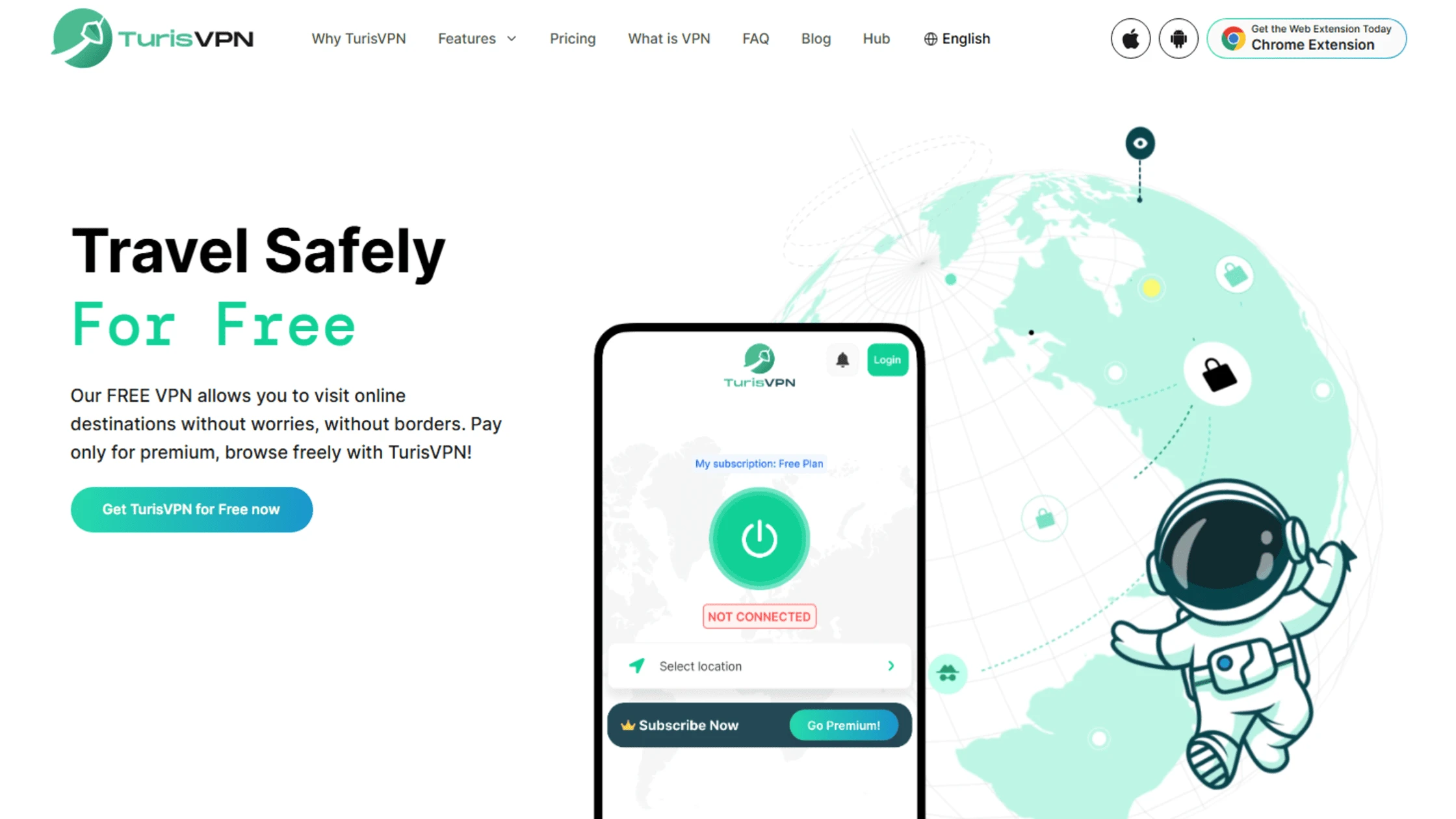
TurisVPN shields you from FedEx scams by encrypting your internet traffic and hiding your real IP address. This stops scammers from intercepting your data or targeting you based on your location. Simply connect to TurisVPN’s secure servers to block phishing websites, scam calls, and malicious pop-ups.
Here is a quick guide on how TurisVPN enhances your security:
- Install TurisVPN on your devices.
- Connect to a secure server to encrypt your connection.
- Mask your location to prevent targeted scam calls or texts.
- Keep the app updated to defend against new scam methods.
- Practice safe browsing. Avoid clicking on suspicious links, even with VPN protection.
TurisVPN protects your online activities and helps stop many types of FedEx scam attacks before they reach you, giving you safer browsing and peace of mind
How to Report FedEx Scams (Official Contacts)
It’s essential to report any FedEx scam you encounter. Filing complaints helps trace offenders and protects future victims. Here’s how to get started.
Official FedEx Contacts
The most important step is to alert FedEx immediately. A dedicated team at FedEx fights fraudulent activity:
- Forward Emails: If you receive FedEx scam emails, forward the entire email as an attachment to the official security address: [email protected]. Do not change the email in any way.
- Forward Text Messages: If you receive FedEx scams by text, forward the message to the number 7726. This dedicated number helps FedEx analyse and block fraudulent texts.
- Call Customer Service: If you receive FedEx scam calls, you can call 1-800-463-3339. Speak to a representative to report the incident and verify your package status. This number is key for dealing with online marketplace threats, similar to the guidance on OfferUp scams.
Federal Trade Commission (FTC)
The FTC is the main consumer protection agency in the United States. It collects reports on various forms of fraud, including a FedEx scam.
- Go to ReportFraud.ftc.gov: Visit the website. Provide details about the scam. Include how the scammer contacted you (email, text, or call), the message content, and any information provided.
- Why Report: Your report helps the FTC build cases against scammers. It helps identify trends in a scam that affect the public.
FBI’s Internet Crime Complaint Centre (IC3)
If you have lost money or provided significant personal information due to a FedEx scam, file a detailed report with the FBI’s Internet Crime Complaint Centre (IC3). Reporting is encouraged for all cybercrimes, including highly targeted attacks like trading bot scams.
- Visit the IC3 Website: Go to ic3.gov and click “File a Complaint.”
- Provide Extensive Detail: Include all relevant information: the date and time of the incident, any fraudulent account numbers, email addresses, phone numbers, and the amount of money lost.
Bottom Line
FedEx scams threaten consumer safety worldwide, affecting trust in modern delivery and communications. Attacks range from fake texts and phishing emails to suspicious calls, job offers, and manipulated QR codes.
Our team at TurisVPN urges every user to stay alert, verify messages, and use proven digital security tools. By following the practical advice above, you reduce the risk of falling victim and help build a safer online community. Safe delivery starts with smart decisions, and together, we can crush the rise of scams from FedEx.