






In the digital age of 2025, messaging apps have become an indispensable part of our daily lives. Among countless options, Signal vs Telegram stand out as two of the most talked-about contenders. If you’re wondering is Signal better than Telegram or which app is truly safer?, let’s find out in this blog post below!
What’s the Difference Between Signal vs Telegram?
Before we dive into the differences between Signal and Telegram, let’s first understand what Signal and Telegram actually are.
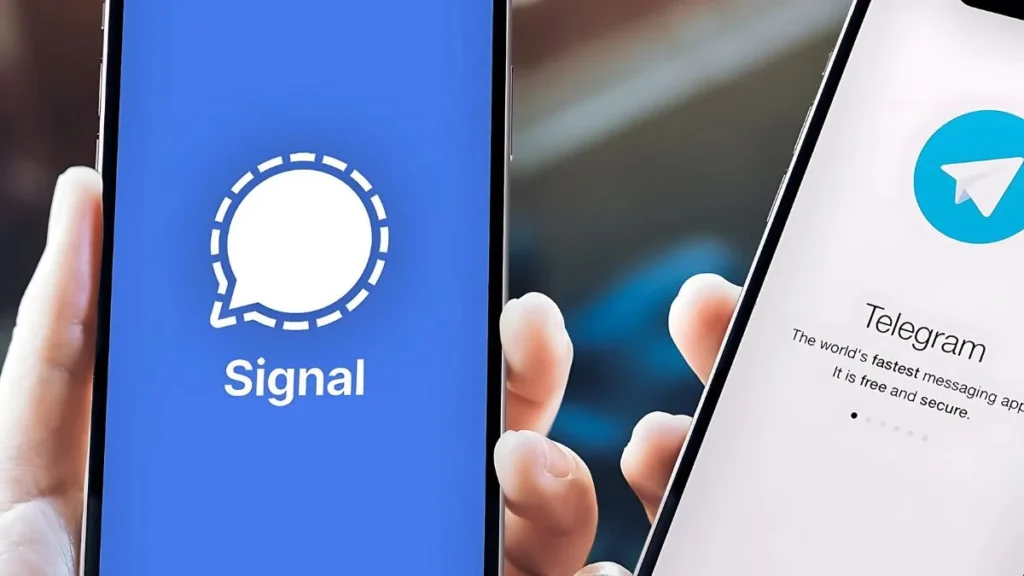
Signal is a privacy-focused messaging app known for its end-to-end encryption by default. Telegram, on the other hand, is a feature-rich messaging app that focuses on speed and flexibility. It offers cloud-based chats, large group channels, bots, and advanced media sharing.
While both apps let you chat, call, and share files, their core priorities differ:
| Feature | Signal | Telegram | Which is Better? |
| Primary Goal | Absolute privacy and security. | Speed, convenience, and scalability. | Signal if you prioritize privacy; Telegram if you prefer speed and features. |
| Encryption | End-to-end encryption by default | End-to-end encryption in secret chats only | Signal because encryption is always on by default. |
| Group Size | Limited number of group members. | Up to 200,000 members | Telegram, much larger group capacity. |
| Data Collection | Minimal, only phone number | Collects contacts, basic metadata | Signal, minimal data collection. |
| Bots & Public Channels | No bots, no public channels | Supports bots and public channels | Telegram, better for communities and automation. |
| Source Code | Fully open-source | Partial open-source (clients only) | Signal, full transparency with open-source code. |
| Monetization | Non-profit, no ads | Discussions about monetization ongoing | Signal, no ads, no commercial interests. |
While Signal vs Telegram may seem similar, their design priorities are very different.
Is Signal Better Than Telegram?
Is Signal better than Telegram? What you value more will determine the answer. Signal is a better option if privacy is your top priority. If your main concern is privacy, Signal is the better choice. Signal encrypts all conversations by default and collects almost no data.
However, if you prefer flexibility such as using bots or joining sizable communities, Telegram might be your pick. Still, Telegram’s default privacy settings are less strict. Signal is a better option if privacy is your top priority. Signal gathers virtually no data and by default encrypts all conversations.
You can also read this comparison between Viber and WhatsApp to see how these apps compare to other rivals.
Signal vs. Telegram: Popularity and Adoption
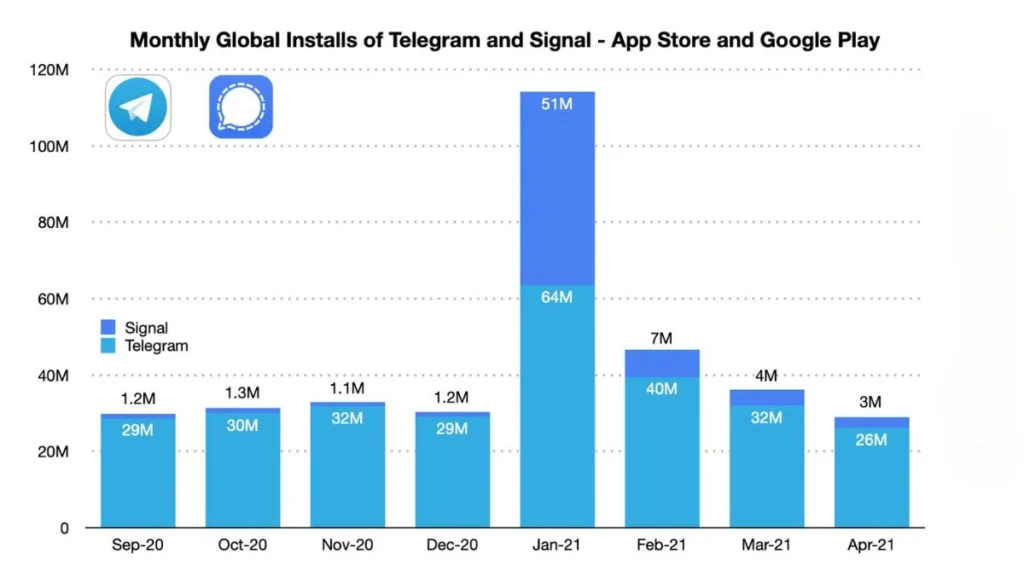
In terms of popularity, Telegram has amassed a massive user base globally. As of March 2025, Telegram has reached 1 billion monthly active users, with approximately 450 million daily active users.
However, Signal has a smaller but loyal user base of around 40 million users. It has gained a strong reputation among privacy advocates, journalists, and security professionals, especially after incidents like the WhatsApp privacy policy backlash.
Both Signal and Telegram are not owned by Meta. Signal focuses on privacy, while Telegram offers more features for group chats and media sharing. With such extensive privacy and user features, many users have moved away from mainstream apps like WhatsApp.
In summary, if you care about privacy, minimal data collection, and default end-to-end encryption, Signal is a better choice, especially for those who need high security. On the other hand, if you prefer more features like large group chats, channels, file sharing, and easy use across multiple devices, Telegram is the better option.
Signal vs. Telegram: Privacy and Security Compared
When it comes to Telegram secure messaging versus Signal’s secure protocols, there are major differences.
Signal Security Features
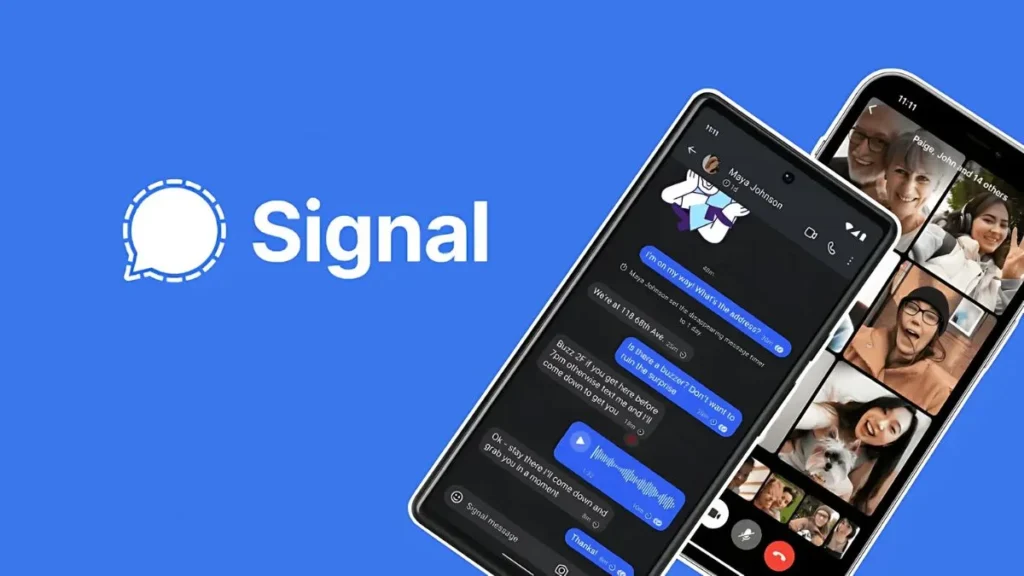
Signal uses the Signal Protocol, an end-to-end encryption protocol widely recognized as one of the most secure available. Key privacy features include:
- Default End-to-End Encryption: All messages, voice calls, and video calls are automatically end-to-end encrypted.
- Fully Open Source: Signal’s source code, including both client and server, is publicly available for security experts to review and verify.
- Minimal Metadata Collection: Signal is designed to collect as little metadata (data about who is talking to whom, when, or from where) as possible. The app only stores your phone number, but it doesn’t link it to your contacts, IP address, or other personal information.
- Disappearing Messages: Users can set messages to automatically disappear after a set period, further enhancing privacy.
- Screen Lock and App Protection: You can set a PIN or fingerprint lock to protect the Signal app on your device.
- HIPAA compliant in terms of encryption strength, making it suitable for sensitive communications.
Telegram Security Features

Telegram uses its proprietary MTProto encryption protocol. While Telegram markets itself as secure, its encryption implementation differs from Signal’s in a few key ways:
- Cloud-based chats are not end-to-end encrypted.
- Secret Chats (End-to-End Encryption): To achieve true end-to-end encryption, users must initiate a “Secret Chat.” These secret chats are only available for one-on-one conversations and do not support groups.
- Partially Open Source: Only the client-side source code is public. The server-side code is not publicly available, which reduces the possibility of independent verification of the entire system’s security.
- Disappearing Messages: Similar to Signal, Telegram also offers disappearing messages within Secret Chats.
- Two-Step Verification (2FA): Telegram encourages users to enable 2FA to enhance account security.
While Signal offers comprehensive and default end-to-end encryption, Telegram requires users to actively use “Secret Chats” to achieve the same level of security.
In conclusion, if you want the highest level of privacy and security by default, Signal is the better choice. If you prefer more features, big group chats, and cloud storage, but don’t mind turning on extra settings for private chats, Telegram is a good option. Signal is great for sensitive conversations, while Telegram is better for casual chatting with more tools and flexibility.
Does Signal or Telegram Collect Your Data?
The question “Does Signal or Telegram collect your data?” is a primary concern for many users, especially those who prioritize privacy in their digital communication.
The short answer is yes, but the amount and type of data each app collects are very different. Let’s explore exactly how Signal and Telegram handle your personal information below.
How Signal Uses Your Data?
Signal is designed to protect your privacy by collecting as little data as possible. Here’s how it handles your information:
- Minimal data collection: Signal requires only your phone number to register—no email, name, or other personal data is necessary.
- No message or metadata storage: Message content, media, and metadata beyond what’s essential for delivery (e.g., recipient ID) are never stored on Signal’s servers.
- Sealed Sender: This feature conceals the sender’s identity from Signal’s servers by encrypting sender metadata—only the recipient can identify the sender.
- No ads or trackers: Signal is non-profit, runs no advertising, and doesn’t use third-party analytics.
How Telegram Uses Your Data?
Telegram collects more data than Signal. Although Telegram claims not to sell user data and not to use data for targeted advertising, their privacy policy allows for the collection of certain types of information.
- Cloud-based chat storage: Telegram stores all non-Secret Chats on its cloud servers, enabling sync across devices but increasing data retention.
- Broader metadata collection: The app collects contact lists, IP addresses, basic usage metadata, and chat content in the cloud.
- No ads yet, but monetization plans: Telegram currently runs ad-free, but has discussed future monetization strategies that may involve data use.
If you’re worried about is Signal or Telegram more secure, Signal clearly collects less data and offers more anonymity.
Signal vs. Telegram: Key Features
Beyond security aspects, specific features also play a crucial role in app selection. The functionalities and user experience offered by Signal and Telegram cater to different needs and preferences.
Usability and Scalability
When it comes to usability and scalability, Signal and Telegram take very different approaches based on what users need most.
Signal
Signal prioritizes a streamlined experience that is focused on private communication and emphasizes simplicity and intuitiveness:
- The interface is straightforward and prioritizes privacy.
- Group size restriction (up to 1,000 members).
- Video and audio calls are safe.
- No public channels or bots.
Telegram
Telegram is a well-liked option for bigger communities and content broadcasting because of its strong scalability and wide feature set:
- Rich features include polls, public channels, stickers, and bots.
- Groups have the capacity to grow to 200,000 members.
- Supports multi-device login.
- Flexible cloud storage, though it compromises security.
Unique Features Comparison
Both Signal and Telegram offer unique features, but they focus on very different things. Let’s take a closer look at how their key features compare.
| Unique Features | Signal | Telegram |
| Private Notes | Allows you to securely store notes within the app. | No similar integrated feature. |
| Voice & Video Calls | End-to-end encrypted, private | Available, not fully end-to-end encrypted |
| Group Calls | Encrypted small group calls | Voice chats and video calls for large groups |
| Cross-Platform Sync | Limited | Fully cross-platform with cloud sync |
| Bot API | No official bot API. | Powerful bot API, allowing for complex bot creation. |
| File Sharing | Secure, limited file sharing | Large file sharing up to 2GB per file |
| Channels & Supergroups | Limited group member count. | Supports channels and groups up to 200,000 members. |
Why Using TurisVPN is Essential for Enhanced Privacy
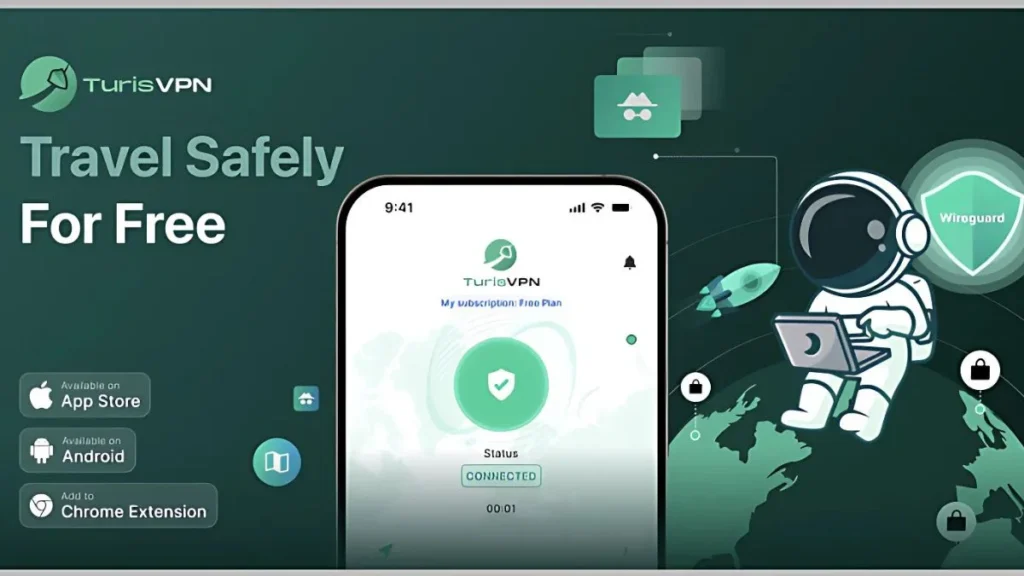
Your internet provider or government organizations may still be able to track your IP address and online identity even if you use secure messaging apps. A Free VPN like TurisVPN protects you by:
- Hiding your IP address: Prevents third parties from tracking your real location and online activities.
- Encrypting your traffic: Protects your data from being intercepted and read, even when you use insecure public Wi-Fi.
- Bypassing censorship: Allows you to access apps and websites that may be blocked in your region.
- Preventing the gathering of data: Signal excels at this, but TurisVPN goes one step further by encrypting data before it leaves your device.
→ Using TurisVPN in conjunction with Signal or Telegram guarantees your online identity and communications.
Country-Specific Insights: Signal and Telegram Usage in Singapore & Malaysia
In Singapore and Malaysia, Telegram leads in general usage. It’s popular among students, businesses, and hobby communities because of its flexibility and large groups.
Telegram’s application history shows strong adoption in countries like India, Russia, Brazil, Indonesia, and Vietnam, with over 1 billion monthly active users as of early 2025. In contrast, Signal is steadily growing, especially among younger users concerned about privacy. In some regions like the Netherlands, it has even topped app store rankings.
To further protect your online identity, many users in these countries also rely on Singapore VPN and Malaysia VPN services. A VPN helps mask your IP address, avoid government restrictions, and ensures additional security while using Signal or Telegram.
→ Overall, both countries see the presence of Signal and Telegram, reflecting the global trend of seeking alternatives to apps owned by large corporations.
Bottom Line
When it comes to Signal vs Telegram, it all comes down to your personal needs. Many people choose to use both: Signal for private, sensitive conversations and Telegram for social chats, large group discussions, and media sharing.
No matter which app you choose, Signal, Telegram, or even others—don’t forget to check out comparisons like Telegram vs WhatsApp to make the best decision. And for extra privacy and security, pairing your messaging app with a trusted VPN like TurisVPN is always a smart move.
FAQs
Q1. Is Telegram Still Safe to Use?
Yes, Telegram is safe for general conversations and accessing communities. However, for sensitive chats, use Secret Chats or opt for Signal for stricter privacy.
Q2. Is Signal Russian Owned?
No, Signal is not Russian-owned. Signal is owned and operated by the Signal Technology Foundation, a US-based non-profit organization. It was co-founded by Moxie Marlinspike and Brian Acton (the WhatsApp co-founder who left Meta).