






Is Bybit legal in US? No, Bybit remains officially unavailable and restricted for residents and citizens of the United States. Even though the US crypto regulatory landscape has seen clearer enforcement and licensing requirements in recent years, Bybit has chosen to keep the US listed as an “Excluded Jurisdiction.”
Our blog post explains exactly why Bybit is not legal in the US, what risks American users face, and what safer, compliant alternatives exist. So, you can make informed decisions without putting your funds or legal standing at risk.
Key Takeaways
|
Is Bybit legal in the USA?
No, Bybit is not legal or authorized to operate in the United States. Bybit is not a licensed crypto exchange in the US. It is not registered with the SEC, not regulated by the CFTC, and not listed as a Money Services Business (MSB) with FinCEN. Because of this, Bybit formally exited the US market and does not offer services to US residents.
Key points US users must understand:
- US residents (including green card holders): Bybit treats this as a restricted user group. Even with a VPN, accounts can be limited or closed once detected through KYC or compliance checks.
- Non-US citizens physically in the US (tourists, students, business travelers): Being in US territory is still a red flag because Bybit blocks US IP ranges. A user may be unable to log in or trade while in the US, even if the user’s home country is supported.
- KYC looks at more than “where you are today”: Bybit’s verification can evaluate nationality/citizenship, country of residence, and proof of address (plus phone number/payment rails). Location/IP is one layer, but KYC identity and declared residency often decide whether the account is allowed.
VPN does not make Bybit legal in the US. A VPN only changes your IP location. It does not change your residency, citizenship, or legal status. So even if a VPN helps you reach the website, using Bybit from the US is still unauthorized under Bybit’s rules.
Bybit’s own rules are very clear. Section 11.3 of the Bybit Service Agreement explicitly lists the United States as a restricted jurisdiction. Providing false information about your location or residency to bypass these restrictions is a direct violation of Bybit’s Terms of Service and can result in:
- Immediate account suspension
- Frozen funds
- Permanent account termination
Instead of taking unnecessary risks, US residents should use fully compliant exchanges such as Coinbase, Kraken, or other US-regulated crypto platforms.
Why Bybit does not operate officially in the US?
Bybit is banned in the US because complying with American crypto laws would fundamentally change its business. Operating legally in the US would also require Bybit to spend millions on ongoing compliance operations. Below is a clear breakdown of some reasons:
Lack of Clarity
For years, US crypto regulation has been split across multiple agencies and state regulators, which creates overlapping rules and unpredictable enforcement.
This lack of clarity makes it hard for Bybit to keep its current offshore model and product lineup without constant legal risk. That’s why Bybit chose the safer decision to stay out of the US market instead of applying for US licenses and reshaping its business around US-only compliance.
Derivatives Trading
Bybit’s flagship products are high-leverage derivatives (perpetual futures, margin trading, up to ~100x).
In the US, retail derivatives require CFTC registration (e.g., DCM/SEF) and strict leverage limits. Operating legally would mean cutting leverage and restricting products, similar to how some global exchanges created separate, limited US versions. Bybit has chosen not to do this.
Compliance & Licensing
Bybit does not operate officially in the US because US compliance adds heavy cost and constant friction.
The US market is regulated at multiple levels, which means more licensing work, stricter oversight, and ongoing reporting. That slows expansion and forces product changes. Bybit’s model depends on moving fast with one global product set, so the US compliance burden does not fit how the platform runs.
KYC and AML
Bybit enforces mandatory KYC globally. US compliance goes further, requiring:
- US-specific identity standards
- Tax reporting (e.g., 1099s)
- Sanctions screening and recordkeeping aligned with US law
Bybit’s current global KYC stack is not designed to meet US-specific obligations, making official US access impractical.
What countries is Bybit illegal or restricted in?
Bybit blocks access in specific “Excluded Jurisdictions” under its Service Agreement. If you live in one of these places, Bybit can restrict service, close your account, and liquidate open positions if it detects false location details.
North America
- United States
- Canada
Asia
- Chinese Mainland
- Hong Kong
- Singapore
- Uzbekistan
- North Korea
Europe
- France
- Russian-controlled regions of Ukraine (currently including Crimea, Donetsk, Luhansk)
- Sevastopol
Middle East
- Iran
- Syria
Other / Sanctions-related
- Cuba
- Sudan
Extra restriction (important)
Bybit also restricts “Prohibited Parties” on major sanctions lists (e.g., U.S. SDN List, EU Consolidated list, UK Sanctions list) and any entity 50% and owned/controlled by listed parties.
Risks US Users Should Understand Before Using Bybit
Before attempting to access a restricted exchange, it’s important to understand the real risks involved. For US users, using Bybit comes with serious account, legal, and financial exposure that cannot be ignored.
Account and Fund Risks
Although the platform stayed operational, US users accessing Bybit without authorization had no legal protection or recovery rights. If Bybit detects a US-based IP, US KYC data, or a US-issued payment method, it can immediately freeze the account, close positions, and liquidate funds without warning, with no appeal process.
In February 2025, Bybit also experienced one of the largest crypto security incidents in history, losing approximately $1.5 billion in Ethereum. US-based users were especially vulnerable, as restricted users typically have lower priority in recovery or dispute processes.
Legal and Financial Penalties
US regulators have expanded crypto enforcement significantly. In 2025, the IRS increased the use of “John Doe” summonses and cross-platform data matching.
Even if Bybit itself does not report to US authorities, bank transfers, P2P payments, or on-chain activity can still flag audits. Failing to report gains or using restricted platforms can result in back taxes, heavy fines, or criminal charges.
Loss of User Protections for US-Based Accounts
Using Bybit from the US means operating in violation of the platform’s Terms of Service. This removes access to user protections, including any customer protection or recovery funds.
In the event of another major hack, insolvency event, or regulatory shutdown, non-compliant accounts are typically deprioritized or excluded entirely from compensation.
TurisVPN and crypto access – what users should know
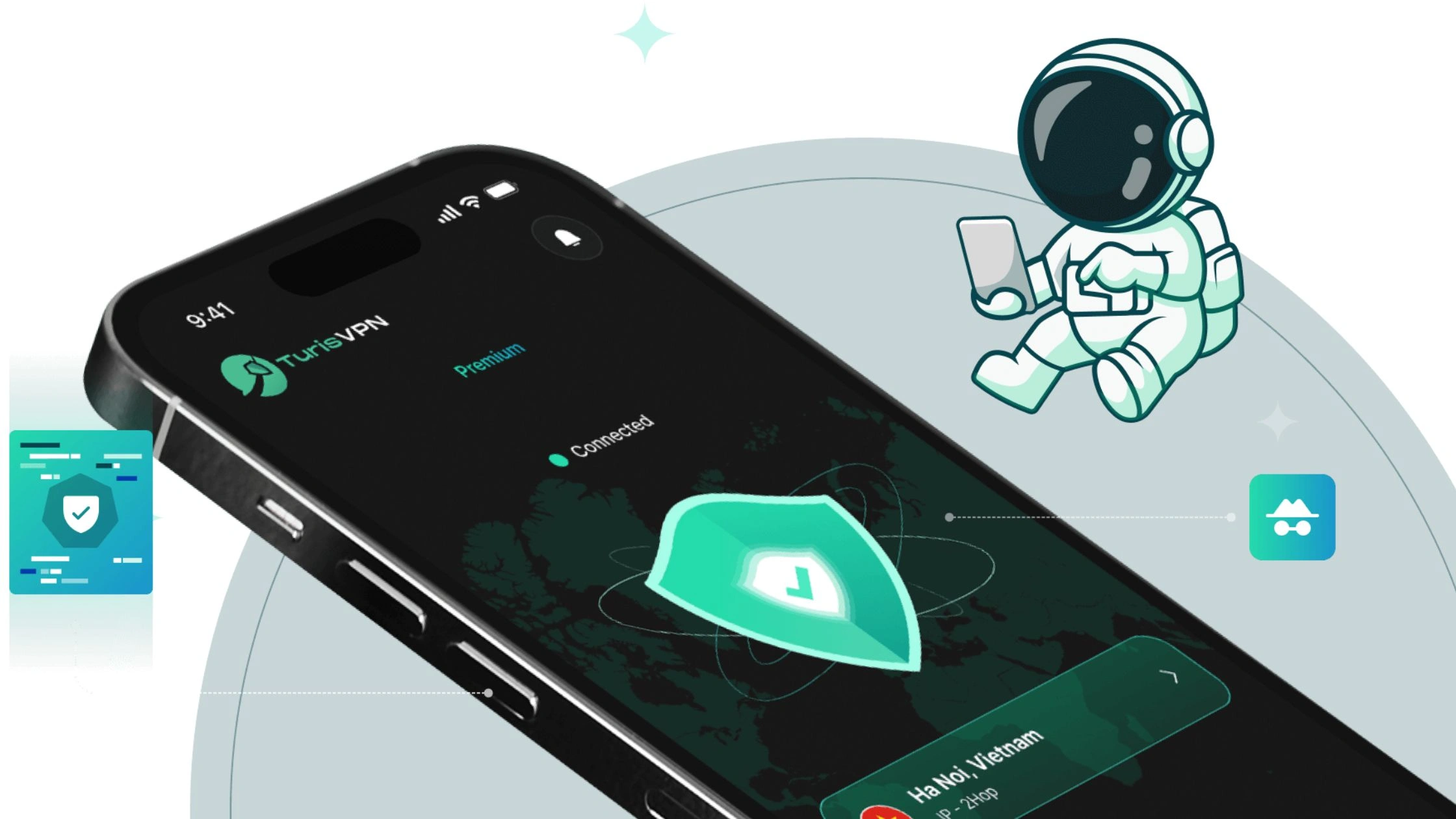
TurisVPN protects online privacy, not to bypass laws or platform rules. It helps reduce tracking exposure when researching markets, managing wallets, or accessing blockchain tools on unsecured networks.
How TurisVPN supports privacy-focused browsing
TurisVPN encrypts your internet traffic and masks your real IP address, which helps prevent ISP monitoring, data harvesting, and Wi-Fi snooping, especially important when checking prices, reading exchange docs, or accessing DeFi dashboards on public networks:
- Protects your IP address: TurisVPN masks your real IP, reducing exposure to targeted attacks, phishing, and profiling aimed at crypto users.
- Encrypts all traffic: Your data is protecting logins, wallet activity, and research from hackers on public or shared Wi-Fi.
- Prevents ISP monitoring: ISPs cannot see which crypto platforms or DeFi dashboards you visit, helping avoid tracking and throttling.
- Safer access while traveling: TurisVPN keeps your connection secure when accessing crypto resources from hotels, airports, or foreign networks.
- Reduces tracking and data harvesting: VPN encryption limits website analytics, trackers, and third parties from building a behavioral profile around your crypto activity.
Important limitations and responsibilities when using TurisVPN
Using a VPN does not make restricted platforms legal or authorized in your country. You remain responsible for following local laws, exchange Terms of Service, tax rules, and KYC requirements. TurisVPN should be used to enhance privacy and security, not to misrepresent residency or bypass compliance checks.
alt: Using TurisVPN for Privacy-Focused Crypto Browsing
Quick Steps: Using TurisVPN for Privacy-Focused Crypto Browsing
- Step 1: Install TurisVPN: Download and install TurisVPN on your device.
- Step 2: Log in and connect: Sign in, then connect to a nearby server for stable speed and low latency.
- Step 3: Browse crypto platforms safely: Use TurisVPN while researching exchanges, checking charts, reading docs, or managing wallets, especially on public Wi-Fi.
- Step 4: Stay compliant: Disconnect TurisVPN before any action that requires accurate location or identity verification, and always follow local laws and platform rules.
Conclusion
So, is Bybit legal in the US? The answer remains no. Bybit is officially restricted in the United States and does not hold the licenses required to operate under US financial regulations. Any access by US residents is unauthorized, carries real account and legal risks, and offers no consumer protection if something goes wrong.
While tools like TurisVPN can help protect privacy during general crypto research and browsing, they do not make Bybit legal in the US or remove the responsibility to follow local laws and exchange terms. US users should prioritize fully licensed exchanges that comply with SEC, CFTC, and FinCEN rules to avoid frozen funds, penalties, or long-term legal trouble.
FAQs
Q1. Is Bybit better than Binance for US users?
For US users, neither is “better” because neither is legal. However, Binance.US is a separate, regulated entity that is legal in most US states. Bybit has no such US-compliant version, making Binance.US the safer, legal choice.
Q2. Which crypto exchanges are legal in the USA?
In 2025, the most reliable and fully compliant crypto exchanges in the US include Coinbase, Kraken, Gemini, and Crypto.com. These platforms are registered with US regulators and meet SEC, CFTC, and FinCEN requirements.
Q3. Is buying crypto on Bybit allowed for US users?
No. Bybit blocks US-issued cards and bank transfers, and US users are restricted under its Terms of Service. Even if someone deposits crypto using a VPN, mandatory KYC will eventually detect US residency, which can result in frozen funds or account termination.