



Can you use Binance in the US? The short answer is no for Binance.com and yes partially for Binance.US. While Binance.US has officially relaunched USD services this year, the global Binance.com platform remains strictly off-limits to US residents under federal law.
Our blog post explains what US users can and cannot do, how Binance.US differs from the global platform, and what risks you need to understand before choosing either option.
Key Takeaways
|
Is Binance available in the US?
No, Binance.com is not available in the United States. However, Binance.US is legally available as a separate, US-regulated platform. Binance.US is built to comply with American regulations. The global platform, Binance.com, is not legally available to US residents.
State restrictions still apply. Even Binance.US does not operate nationwide. As of late 2025, it is prohibited in New York, Texas, Vermont, and Hawaii. In addition, operations remain suspended or limited to crypto-only (no USD services) in Washington, Florida, Oregon, and Alaska due to ongoing state licensing and regulatory reviews.
Can You Use Binance in the US?
Yes, but only through Binance.US. US users cannot legally use Binance.com, the global platform. The only supported option is Binance.US, a separate exchange created to comply with US regulations.
Binance.com blocks US users at multiple levels. The platform uses IP geofencing, device fingerprinting, and identity checks to detect US locations. US IP addresses are denied access, and US-issued identity documents fail verification during KYC. Even accounts created abroad can be flagged later if US activity is detected.
Using Binance.com from the US violates Binance’s Terms of Service and US federal law, including the Bank Secrecy Act (BSA). Any attempt to access the global platform as a US resident is considered unauthorized.
If detected, Binance can freeze the account, restrict withdrawals, or permanently close the account without notice.
Why Binance.com is restricted for US users?
Binance.com is blocked in the United States because it does not meet US regulatory requirements. The platform is built for fast listings, high-risk products (like leverage/derivatives), and offshore operations, while the U.S. requires strict registration, token-by-token scrutiny, heavy AML reporting, and customer-asset safeguards that would force Binance.com to redesign core products and processes.
In the U.S., crypto regulation is split across multiple federal agencies: the Securities and Exchange Commission (SEC), Commodity Futures Trading Commission (CFTC), and Financial Crimes Enforcement Network (FinCEN). On top of that, exchanges must comply with state-by-state licensing, including especially strict regimes like New York’s BitLicense.
This layered system creates regulatory overlap, conflicting interpretations, and high compliance friction. Operating nationwide would require Binance to manage 50 different state frameworks while satisfying multiple federal regulators at the same time. That level of fragmentation directly conflicts with Binance.com’s global, centralized operating model, making full U.S. compliance slow, costly, and structurally impractical.
Federal Securities Laws
U.S. regulators require crypto exchanges to register when offering assets that may qualify as securities. The U.S. The Securities and Exchange Commission (SEC) has repeatedly argued that many tokens listed on Binance.com meet the Howey Test, the legal standard used to determine whether an asset is an unregistered security.
In 2023–2024, the SEC filed lawsuits alleging that Binance.com listed and promoted multiple unregistered securities without proper registration, disclosures, or investor protections. Because Binance.com is not registered as a securities exchange, broker, or clearing agency in the United States, continuing to offer these tokens would violate U.S. federal securities laws.
This legal conflict is one of the core reasons Binance.com blocks U.S. users and operates separately from Binance.US, which lists far fewer assets to reduce securities law exposure.
Anti-Money Laundering (AML) Violations
U.S. law enforces strict anti-money laundering rules under the Bank Secrecy Act (BSA). In practice, exchanges must run strong customer checks, monitor transactions, and file required reports through the Financial Crimes Enforcement Network (FinCEN). U.S. prosecutors said Binance.com fell short on these duties for years.
In November 2023, Binance pleaded guilty to federal charges tied to BSA/AML compliance failures and agreed to a $4+ billion resolution with U.S. authorities. That outcome is a major reason Binance.com remains incompatible with U.S. expectations and why the company keeps U.S. users off the global platform.
Derivatives Trading
Binance.com offers futures, options, and high-leverage trading. In the US, these products fall under CFTC oversight and require specific licenses. Binance.com is not registered as a Designated Contract Market (DCM) or SEF, so derivatives access is illegal for US use
Regulatory Oversight
US exchanges must comply with multiple regulators at once: SEC, CFTC, FinCEN, and state authorities. Binance chose not to operate under this framework. Instead, it created Binance.US as a separate, limited platform to reduce regulatory exposure.
Geoblocking & KYC
To enforce these rules, Binance.com uses geoblocking, IP detection, and strict KYC checks. US IP addresses, US phone numbers, and US identity documents trigger blocks or account restrictions. Attempts to bypass these controls violate the platform’s terms and can lead to frozen funds.
Fund Commingling Allegations
Another major reason Binance.com is restricted for U.S. users is long-standing allegations of fund commingling. U.S. regulators accused Binance of mixing customer funds with corporate operating funds, instead of keeping them strictly segregated as required under U.S. financial and consumer-protection laws.
According to enforcement actions brought by the Securities and Exchange Commission (SEC) and findings referenced in broader investigations, Binance entities allegedly routed customer assets through accounts controlled by the company and related parties. This structure made it difficult to clearly separate user deposits, exchange revenue, and affiliate-controlled accounts. In the U.S., strict fund-segregation rules exist to:
- Protect customers if an exchange becomes insolvent
- Prevent misuse of customer assets
- Enable transparent audits and regulatory oversight
Because Binance.com’s global structure did not meet these standards, U.S. regulators viewed the platform as unsafe for American users. This is one of the core reasons Binance was forced to:
- Exit direct U.S. operations
- Create a separate, legally isolated entity (Binance.US)
- Restrict U.S. residents from accessing the global Binance.com platform
In short, fund commingling concerns undermined regulatory trust, making Binance.com incompatible with U.S. financial compliance requirements.
Binance.com vs Binance.US – what’s the real difference?
Binance.com and Binance.US are not the same platform. They share a brand name, but they operate under very different rules. In 2025, the gap between them is even wider.
| Feature | Binance.com (Global) | Binance.US (Local) |
| Number of cryptocurrencies | 500+ cryptocurrencies and trading pairs | ~190+ cryptocurrencies |
| Tokens available | 1,000+ altcoins | ~190 selected tokens |
| Futures & margin | Yes (up to 100x leverage) | No (spot trading only) |
| Liquidity | Extremely high (global order books) | Much lower than global |
| Fees | ~0.1% spot (lower with BNB) | 0% on select pairs / ~0.3% Instant Buy |
| USD support | Limited (mostly EUR/GBP/P2P) | ACH & wire transfers restored (Dec 2025) |
| Regulatory protection | Offshore, no US protections | US-regulated entity |
| State availability | Not allowed in the US | Restricted in several states |
| KYC | Mandatory (biometric verification) | Mandatory (SSN required) |
In summary, Binance.US is legal and USD-friendly for Americans, but it’s spot-only with far fewer coins. Binance.com has more tokens, liquidity, and leverage, but US users can’t use it legally.
Why many US users use a VPN for Binance access
Many US traders look for a free VPN plugin around Binance.com restrictions because Binance.US feels limited by comparison. That said, using a VPN to access Binance.com from the US violates Binance’s Terms of Service and can carry legal and financial risks. The points below explain why people are tempted, not what they should do.
Wider Selection of Cryptocurrencies
Binance.com lists hundreds more altcoins, new launches, and niche tokens. Binance.US offers a much smaller, curated list to comply with US regulations, which frustrates traders who want early access or broader exposure.
Advanced Trading Options
Global Binance supports futures, margin, options, and complex order types. Binance.US is spot-only. Traders who rely on leverage, hedging, or derivatives often feel blocked by the US version.
Lower Fees
Binance.com generally charges lower trading fees and offers deeper discounts when using BNB. Binance.US has improved pricing, but active traders still see higher effective costs on many pairs.
Greater Liquidity
The global platform aggregates worldwide volume, resulting in tighter spreads and faster fills. Binance.US has thinner order books, especially on smaller tokens, which can increase slippage.
Accessibility in Restricted States
Even Binance.US is unavailable or limited in several US states. Some users turn to VPNs simply because they cannot legally open a Binance.US account where they live.
These motivations explain user behavior, not safety. Binance actively enforces geoblocking and KYC. Accounts found accessing Binance.com from the US risk freezes, forced liquidation, and permanent bans.
Using TurisVPN to access Binance in the US
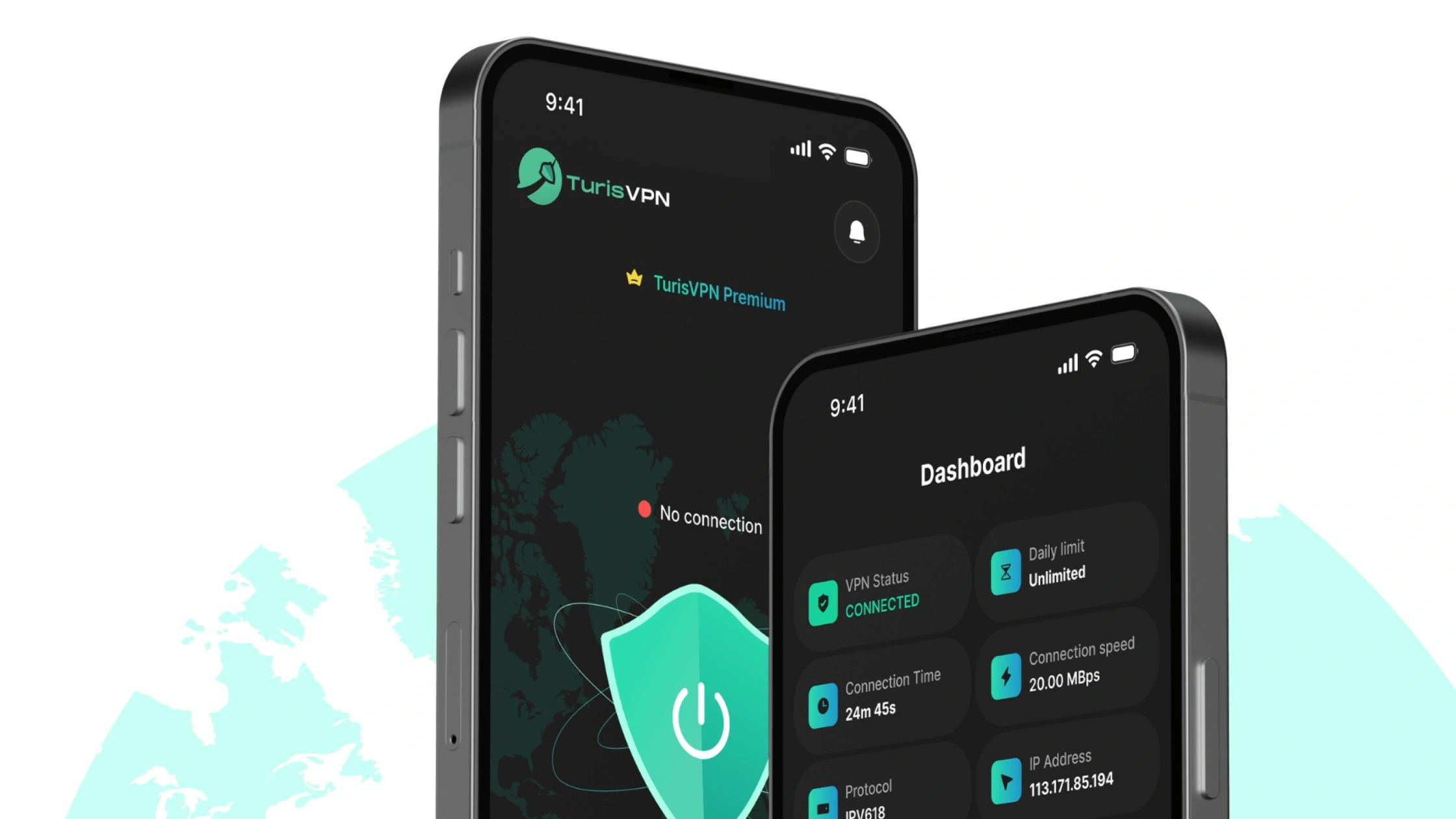
Before anything else, it’s important to be clear: using a VPN to access Binance.com from the US does not make it legal. Binance.com explicitly restricts US users, and bypassing those controls violates its Terms of Service. A VPN cannot change your legal status or protect you from account freezes, KYC blocks, or regulatory consequences.
That said, many users look into a free crypto VPN like TurisVPN for privacy-focused browsing and security, especially when researching crypto platforms, managing wallets, or protecting themselves on public or shared networks.
TurisVPN is designed for privacy and security, not to guarantee access to restricted financial platforms. The free secure VPN role is to protect your connection, not to bypass laws.
Key privacy benefits of TurisVPN:
- Encrypts your internet traffic to protect against hackers on public Wi-Fi
- Hides your real IP address from websites and network observers
- Reduces ISP monitoring and traffic profiling
- Protects browsing activity when accessing crypto dashboards, docs, or wallets
Quick Steps (Privacy Use Only)
- Step 1: Install TurisVPN on your device from the official source.
- Step 2: Log in and connect to a secure server for encrypted browsing.
- Step 3: Keep TurisVPN on when using public Wi-Fi or accessing sensitive crypto-related accounts and tools.
- Step 4: Disconnect before logging into regulated exchanges that require accurate location and identity compliance.
TurisVPN is a strong tool for online privacy and security in crypto research and general browsing. It is not a shield against exchange rules or US regulations.
How to withdraw money from Binance in the US
If you previously used Binance.com and later became restricted as a US user, do not try to trade or deposit more funds. The safest path is to off-board existing assets and move them into a US-compliant exchange. There are differences between them:
- Binance.US: USD withdrawals to US banks via ACH are usually free (0% maker fees) or very low-cost (0.01% taker fees for all new and existing customers).
- Binance.com: Does not support direct USD bank withdrawals for US users. For each withdrawal, a flat fee is paid by users to cover the transaction costs of moving the cryptocurrency out of their Binance account (€1, ACH can be free in some regions).
Follow these steps carefully.
Step 1: Request a One-Time Withdrawal Window
Contact Binance Support and ask for a “one-time withdrawal” due to US restrictions. Binance may temporarily unlock withdrawals so you can move funds out. This window is usually limited and withdrawals only—no trading.
Step 2: Withdraw to a Self-Custody Wallet
Do not attempt to withdraw directly to a US bank.
Send your crypto to a self-custody wallet you control, such as Trust Wallet, MetaMask, Ledger, or Trezor.
- Double-check the network (ERC-20, BEP-20, etc.).
- Start with a small test transfer.
Step 3: Bridge to a US-Compliant Exchange
From your wallet, send the crypto to a regulated US exchange like Binance.US, Coinbase, Kraken, or Gemini. Make sure the exchange supports the asset and network you’re sending.
Step 4: Cash Out to Your US Bank
Sell the crypto for USD on the US exchange, then withdraw via ACH or wire transfer to your linked US bank account. This keeps the process compliant with US regulations and tax reporting.
Important reminders:
- Keep records of all transfers for tax purposes.
- Expect KYC checks on US exchanges.
- If Binance denies a withdrawal window, wait for further instructions from support and avoid repeated login attempts.
Bottom Line
So, can you use Binance in the US? Only in a limited and legal way. Binance.com is not allowed for US users, and trying to access it violates both Binance’s Terms of Service and US regulations.
The only compliant option is Binance.US, which operates under US law but offers fewer tokens, no derivatives, and reduced features compared to the global platform.
FAQs
Q1. Is Binance.US a better option than Binance.com?
For US users, yes. Binance.US is the only legal and compliant option. While Binance.com has more features and assets, it is not allowed in the US. Binance.US is safer, regulated, and designed to meet US laws.
Q2. Can Binance detect my real location?
Yes. Binance uses IP analysis, device fingerprinting, GPS data, KYC documents, and behavioral checks. Even if access works temporarily, accounts are often flagged later and restricted.
Q3. What should I do if my account gets restricted?
Stop trading immediately. Contact Binance support to request a one-time withdrawal. Move your crypto to a self-custody wallet, then transfer it to a US-regulated exchange like Binance.US or Coinbase to cash out safely.